JWT Authentication in Node.js: A Complete Developer Guide
Learn how JWT works and implement stateless authentication in Node.js with Express — login flow, route protection, and complete working code.
Page 3 of 7
Learn how JWT works and implement stateless authentication in Node.js with Express — login flow, route protection, and complete working code.
Learn how to create routes and handle GET/POST requests in Express.js. Includes raw Node.js comparison, complete working code, and routing best practices.
Install Node.js, use the REPL, run your first script, and build a working HTTP server from scratch — no frameworks, no dependencies.

Learn how Node.js uses the event loop and libuv to handle thousands of concurrent requests on a single thread — with real code examples.

Learn the difference between URL parameters and query strings in Express.js, when to use each, and how to access them with real working code examples.

Learn how to store uploaded files with Multer, serve them via Express static middleware, and secure your uploads against common vulnerabilities.

Understand the real differences between sessions, JWTs, and cookies. Learn when to use each auth approach with working Node.js
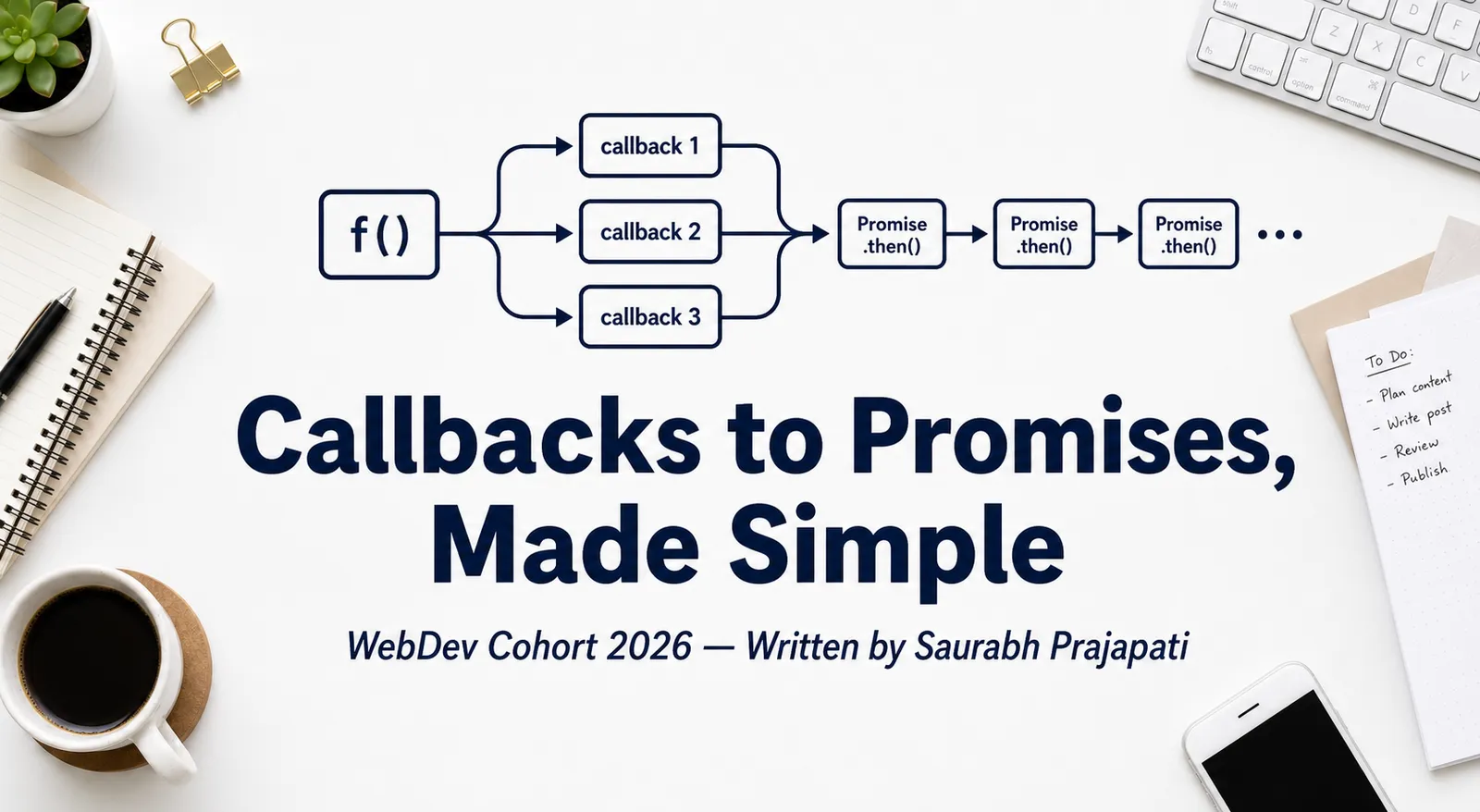
Learn why async code exists in Node.js, how callbacks work, why they fail at scale, and how Promises solve it with real, runnable examples.

Learn how async code works in Node.js, why callbacks nest badly, and how Promises fix it with flat chains and unified error handling.
JavaScript runs one thing at a time (synchronous by default). Asynchronous behavior lets it hand off slow operations — like API calls or timers — and…

Async/await is syntactic sugar over Promises that makes async code read like synchronous code. It was introduced in ES2017 to solve the readability…
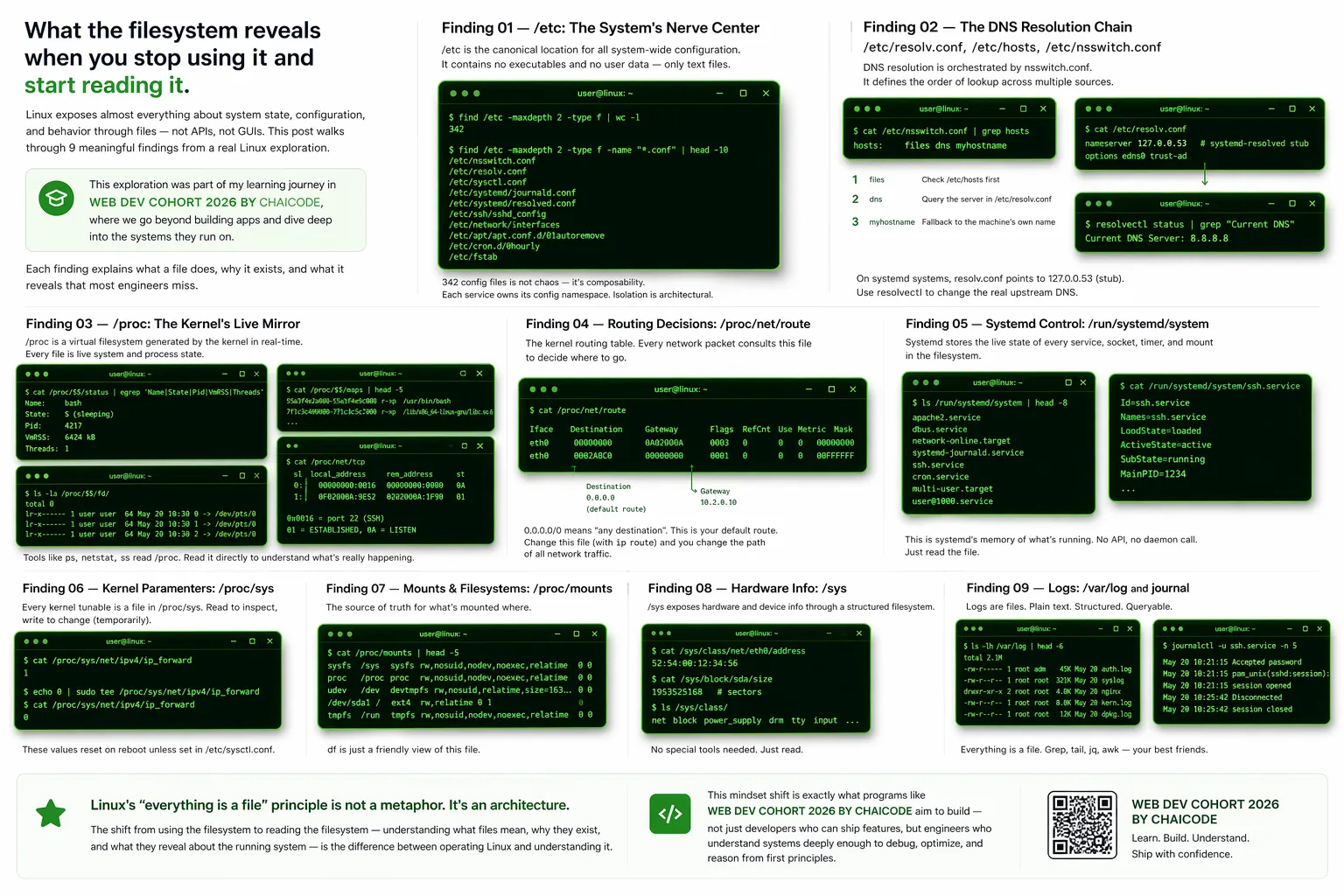
What the filesystem reveals when you stop using it and start reading it. Linux exposes almost everything about system state, configuration, and behavior…