React & Next.js
React Hooks Masterclass: useState, useEffect, and Custom Hooks Explained
Deep-dive into React Hooks: learn how useState, useEffect, and custom hooks work under the hood with real, runnable code examples and clear mental models.
Deep-dive into React Hooks: learn how useState, useEffect, and custom hooks work under the hood with real, runnable code examples and clear mental models.
How React's Virtual DOM, reconciliation and diffing work internally, from setState to pixels on screen.
TypeScript from the ground up: type annotations, interfaces, type aliases, union and intersection types, generics and tsconfig.
Polling, long polling, Server-Sent Events, WebSockets and Pub/Sub compared, with code, trade-offs and guidance on when to use each.
Deep dive into how ChatGPT works: tokenization, Transformer architecture, self-attention, and sampling — with real Python code examples and diagrams.
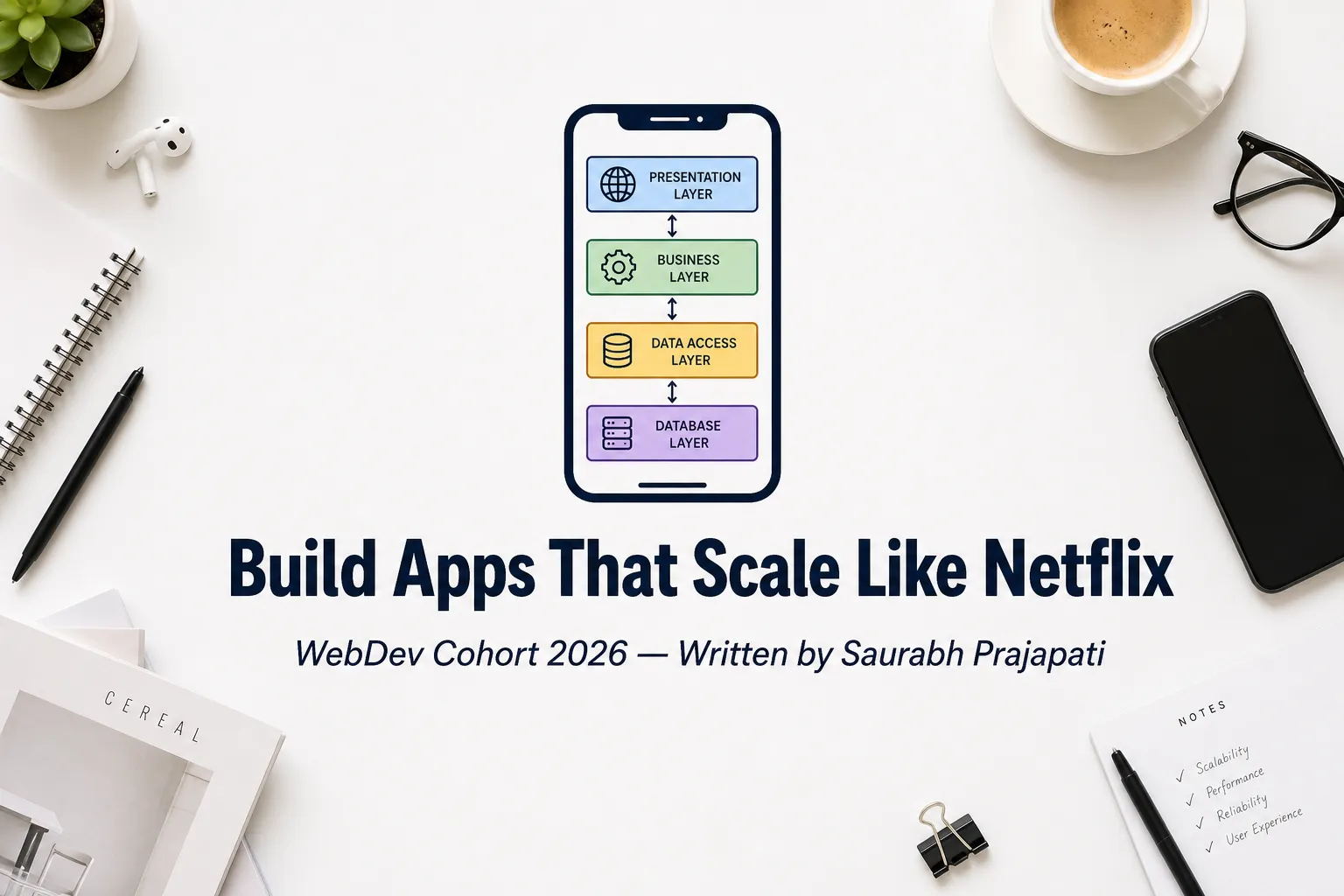
Learn how to build production-grade scalable systems with caching strategies, rate limiting algorithms, and full-stack observability using OpenTelemetry.
Master modern Next.js architecture: App Router, layouts, Server Components, API Routes, and Server Actions with real production patterns and code examples.
Learn React from the ground up: why it exists, how JSX compiles, how components and props work, and how state drives automatic UI re-rendering.
Learn why Next.js was created, how it solves React's core limitations with SSR, SSG, Server Components, and file-based routing, and when to use it.
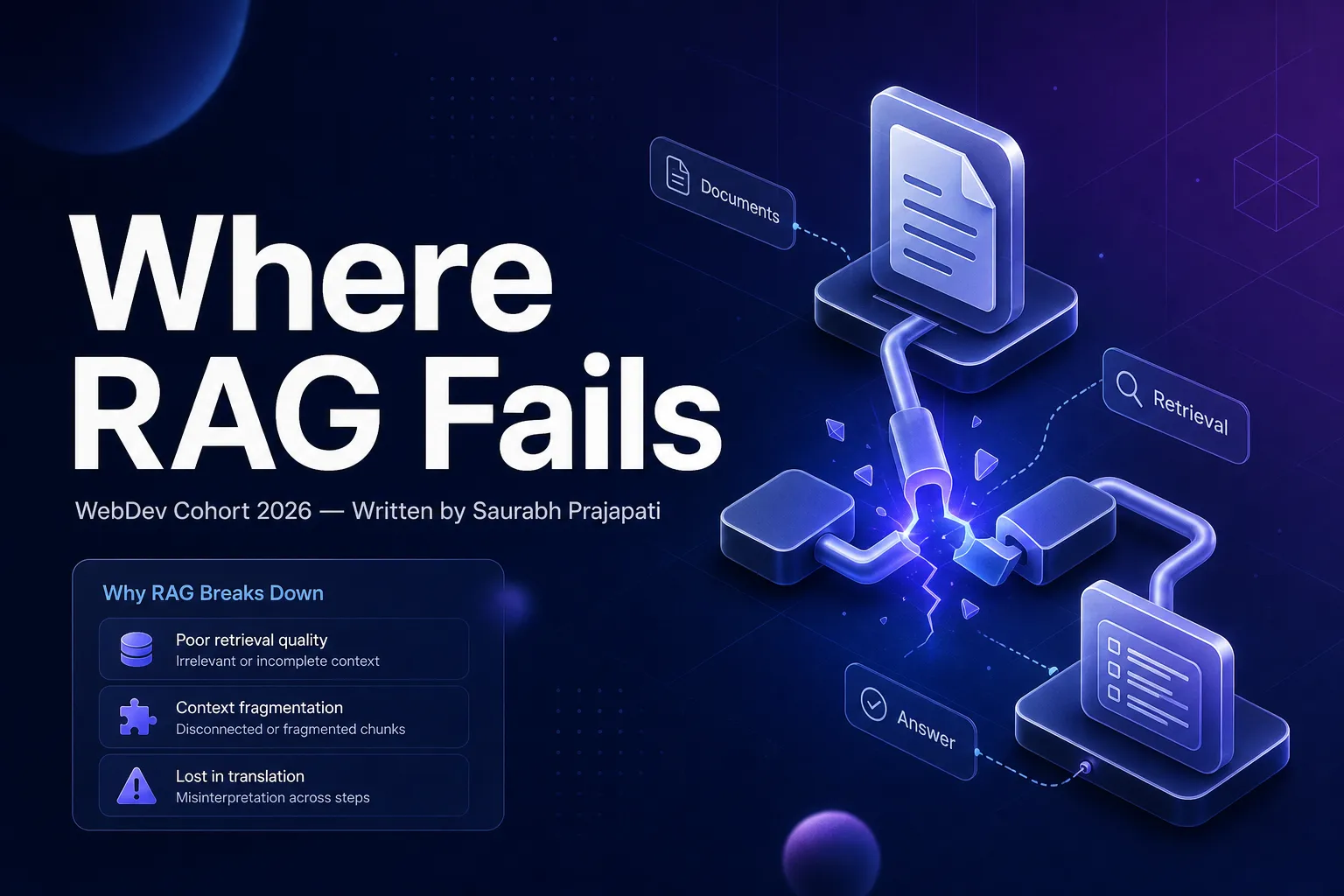
RAG improves LLM answers but does not guarantee correctness. The real failure modes: poor retrieval, bad chunking, hallucination and stale data.
Secure web apps with bcrypt password hashing, role-based access control, OAuth 2.0 and OpenID Connect, with code and diagrams.
Prisma vs Drizzle for TypeScript: SQL vs NoSQL, data modeling, migrations, and how to choose the right database tool for your project.
Expo Router vs React Navigation in 2026: when to use each, with real code for auth flows, nested layouts and production app structure.
How to structure a large React Native app with Expo Router: feature modules, route groups and shared layouts, using apps like Instagram and Uber as examples.
Learn how blocking code kills Node.js server performance and how non-blocking async I/O fixes it. Real file and DB examples with benchmarks.
Learn when to use JavaScript Map and Set instead of Object and Array. Includes performance benchmarks, real code examples, and clear trade-offs.
Learn JavaScript destructuring with real before/after examples. Covers array destructuring, object destructuring, default values, and function parameters.
Learn REST API design with Express.js. Build a users API with GET, POST, PUT, DELETE routes, correct status codes, and clean route conventions.
Learn how the `this` keyword works in JavaScript — global scope, object methods, callbacks, and arrow functions — with clear runnable examples.
Learn what Express middleware is, how next() controls the request pipeline, and see real examples for logging, auth, and validation.
Learn how to handle single and multiple file uploads in Express using Multer. Covers storage config, validation, error handling, and serving files.
Learn what Node.js is, how V8 and libuv power it, and why its event-driven model makes it ideal for I/O-heavy server-side applications.
Learn how JWT works and implement stateless authentication in Node.js with Express — login flow, route protection, and complete working code.
Learn how to create routes and handle GET/POST requests in Express.js. Includes raw Node.js comparison, complete working code, and routing best practices.
Install Node.js, use the REPL, run your first script, and build a working HTTP server from scratch — no frameworks, no dependencies.
Learn how Node.js uses the event loop and libuv to handle thousands of concurrent requests on a single thread — with real code examples.
Learn the difference between URL parameters and query strings in Express.js, when to use each, and how to access them with real working code examples.
Understand the real differences between sessions, JWTs, and cookies. Learn when to use each auth approach with working Node.js
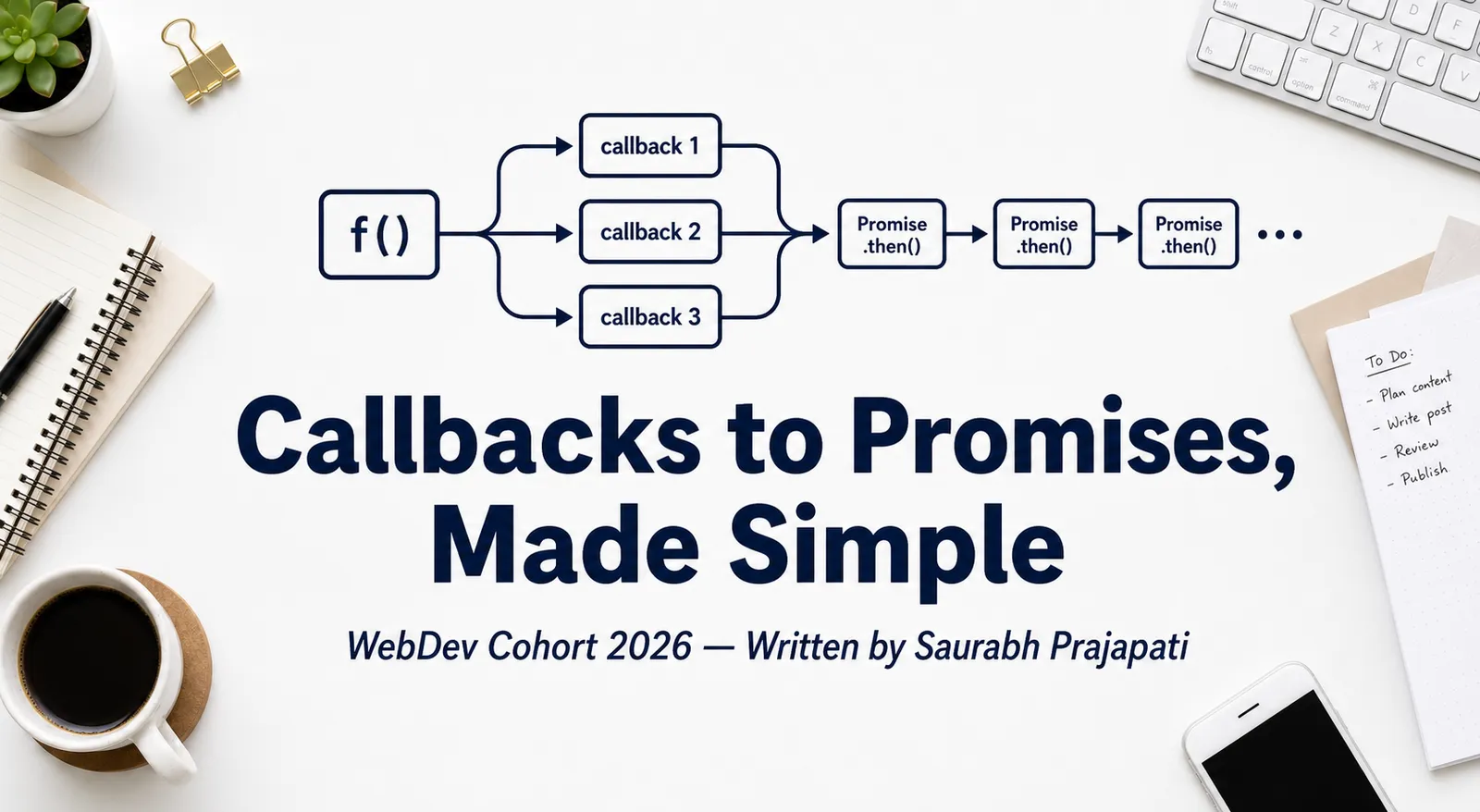
Learn why async code exists in Node.js, how callbacks work, why they fail at scale, and how Promises solve it with real, runnable examples.
How JavaScript runs one thing at a time, and how asynchronous code hands off slow work like API calls and timers without freezing the page.
Async/await is syntax over Promises that makes async code read top to bottom. How it works, error handling with try/catch, and parallel calls with Promise.all.
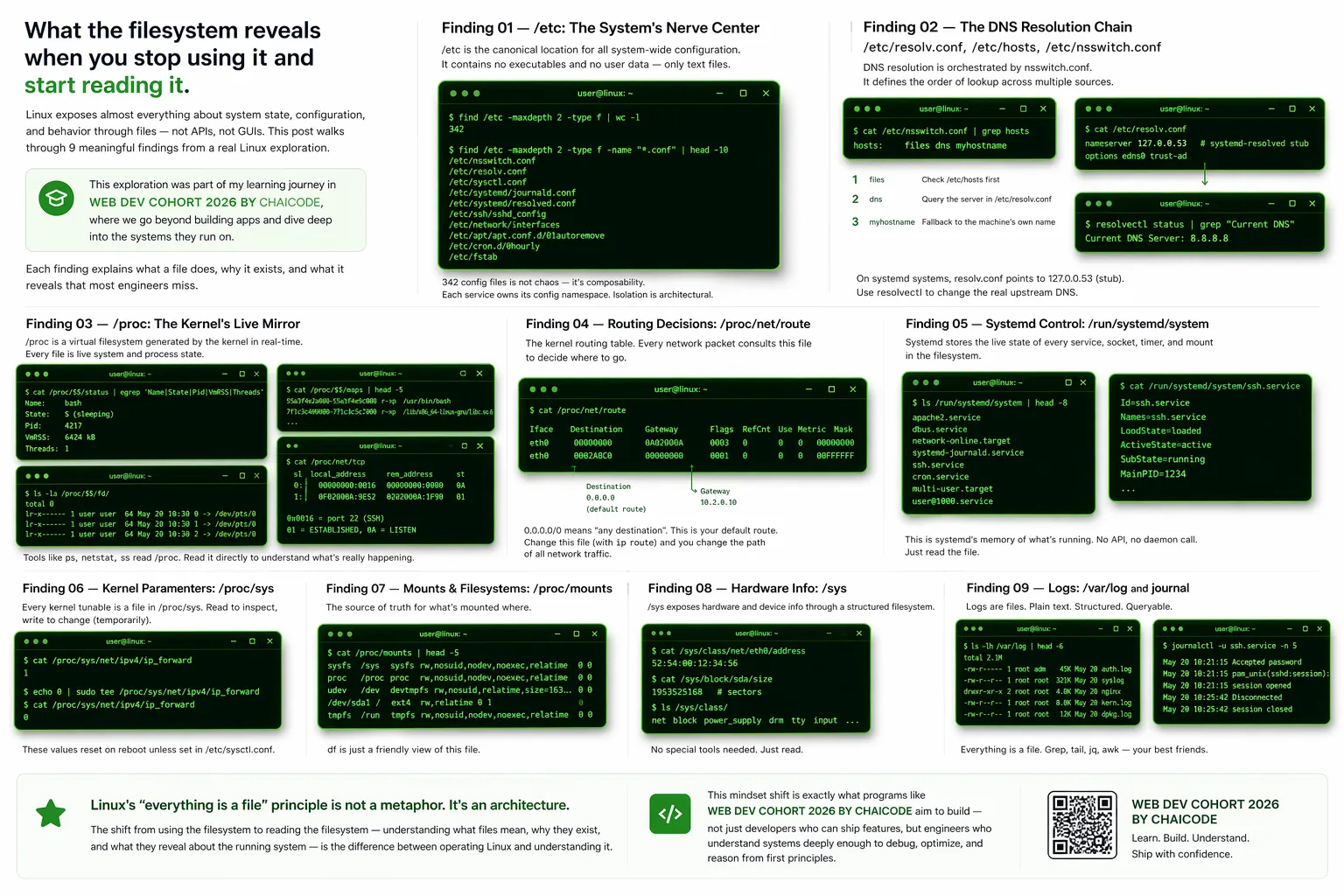
What the Linux filesystem reveals about a running system: /etc, /proc, /var/log and more, explored hands-on from the command line.
From nested chaos to clean lists — understand, implement, and ace every flatten question.
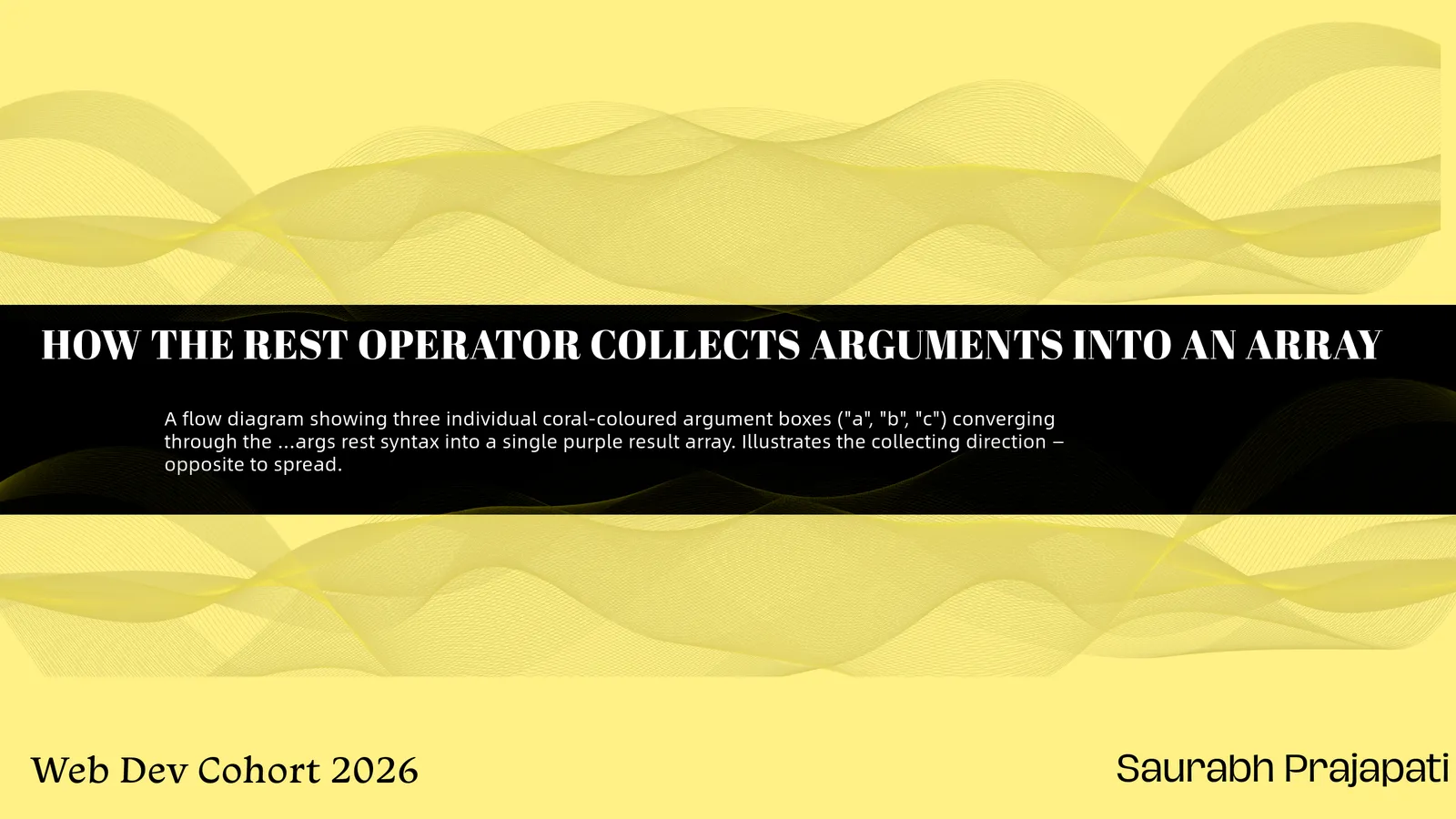
A flow diagram showing a source array [1, 2, 3] being unpacked by the ... spread syntax into three individual amber-coloured elements, which then merg
TypeScript catches Express bugs at compile time, not in production. This guide sets up strict typing, hot-reload dev workflow, and a compiled producti
Learn how structured error handling in JavaScript turns crashes into recoverable moments with real code, clear patterns, and zero fluff.
What JavaScript does step by step when you call a function with new: object creation, prototype linking, binding this, and what goes wrong without new.
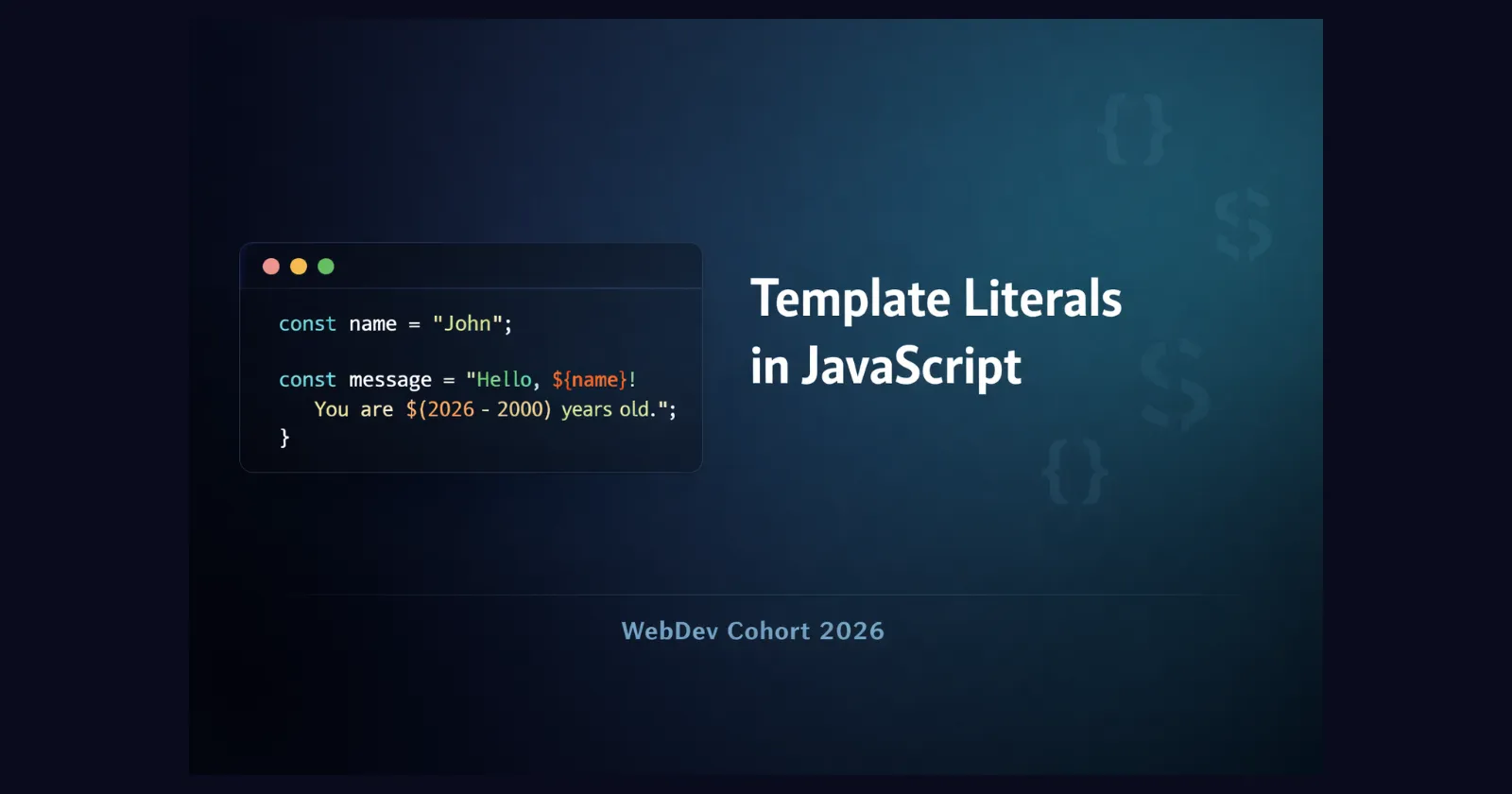
Template literals in JavaScript: embedded expressions, multi-line strings and tagged templates, and how they replace string concatenation.
Implement String methods like includes, trim and repeat from scratch: how string polyfills work and the string questions that come up in interviews.
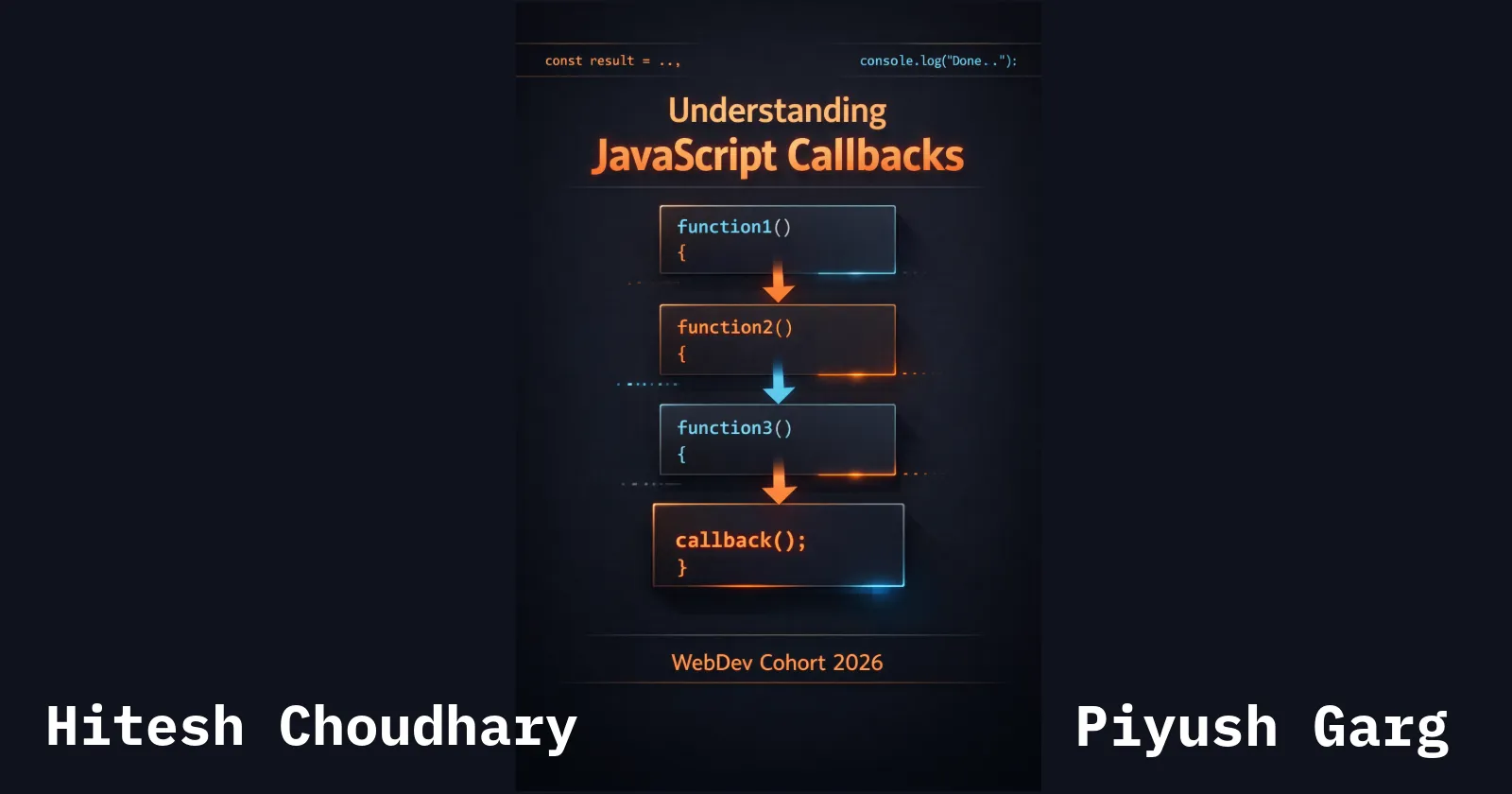
Why callbacks exist in JavaScript, how they work with async code like timers and file reads, and where nesting them starts to hurt.
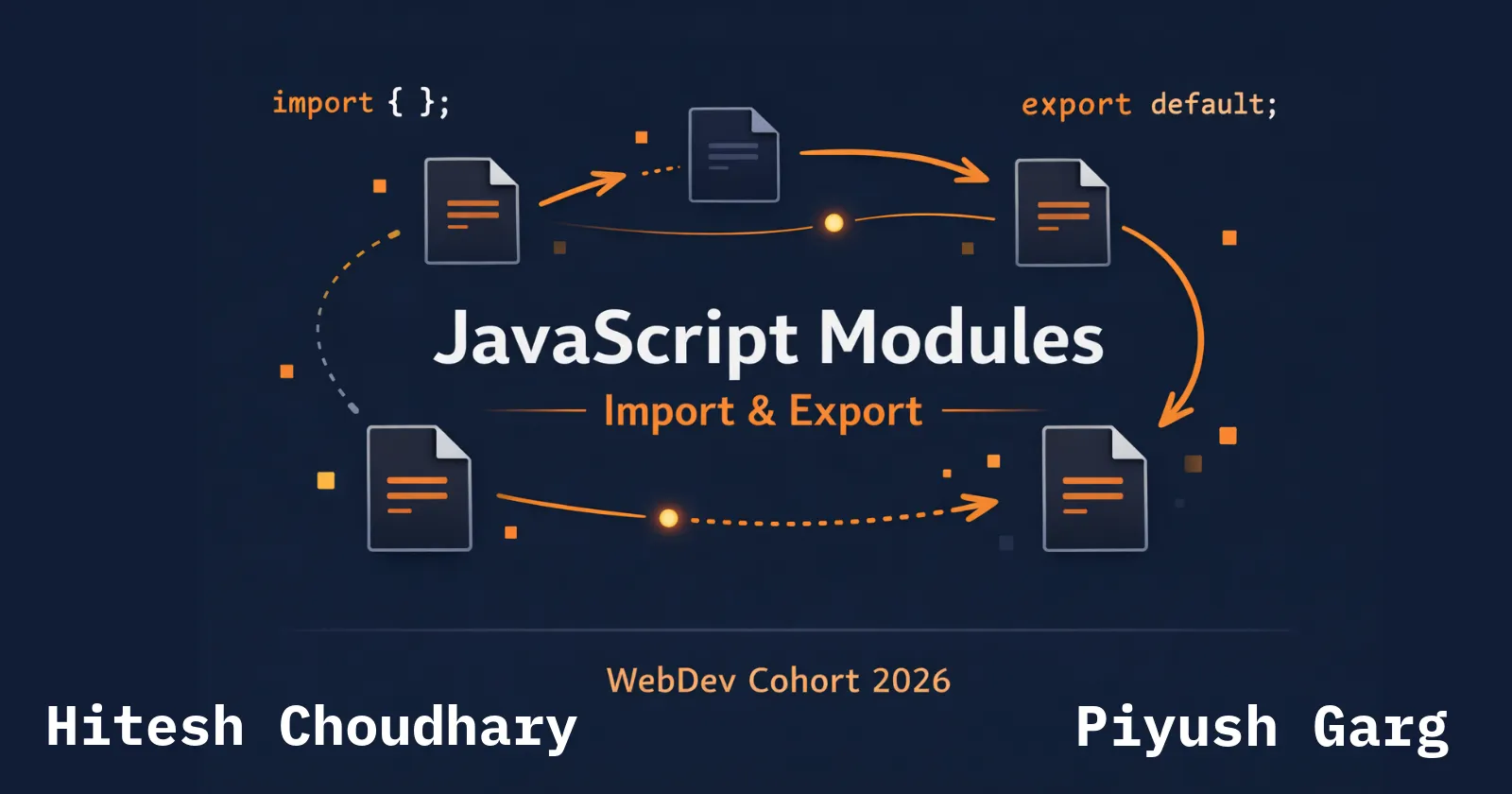
How JavaScript modules work: named and default exports, imports, and how splitting code into modules keeps a project maintainable.
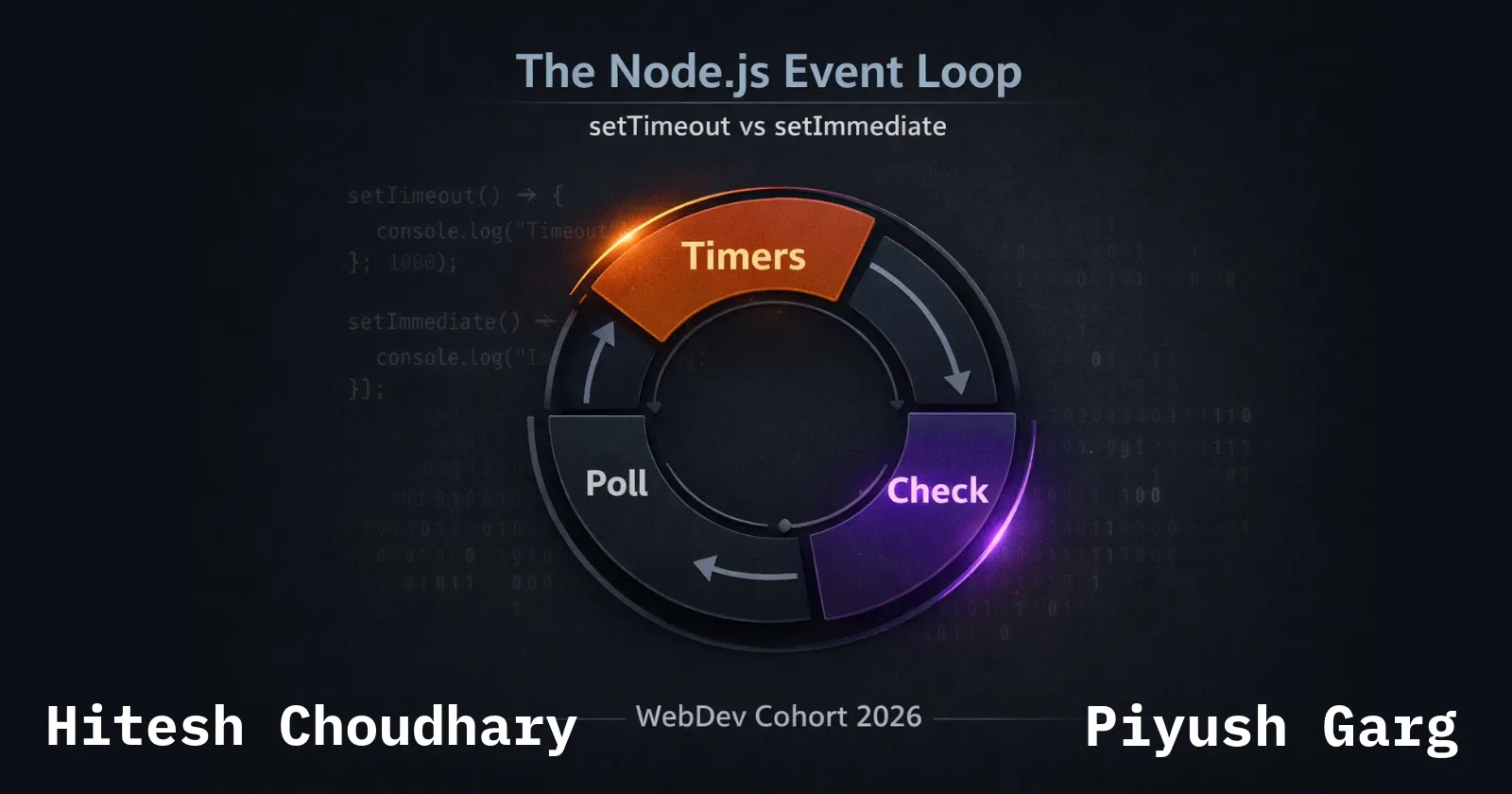
Why setImmediate sometimes runs before setTimeout(fn, 0) in Node.js and sometimes after: the event loop phases and timer precision behind it.
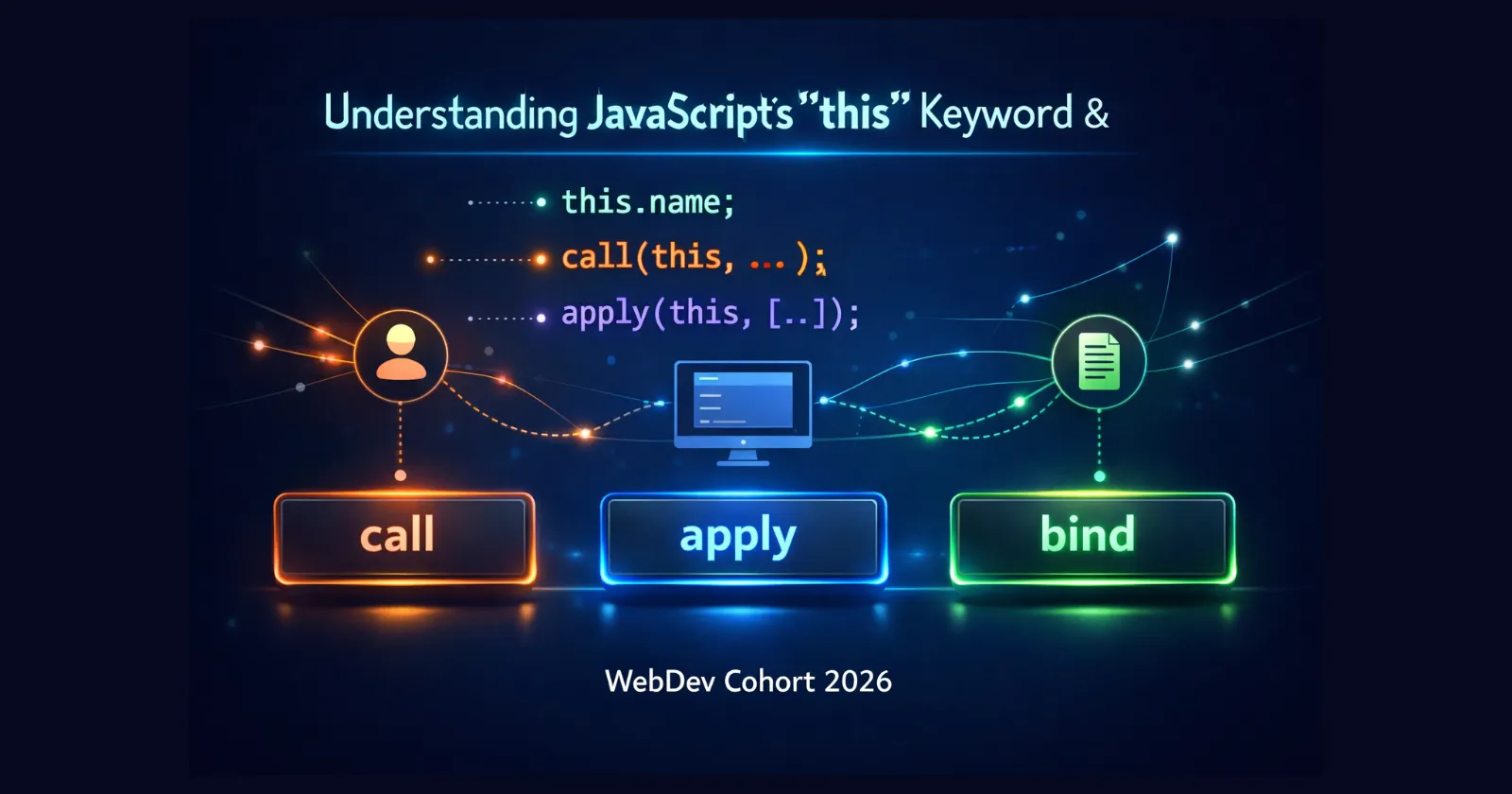
How this works in JavaScript functions and objects, and how call(), apply() and bind() let you control it, with a side-by-side comparison and exercises.
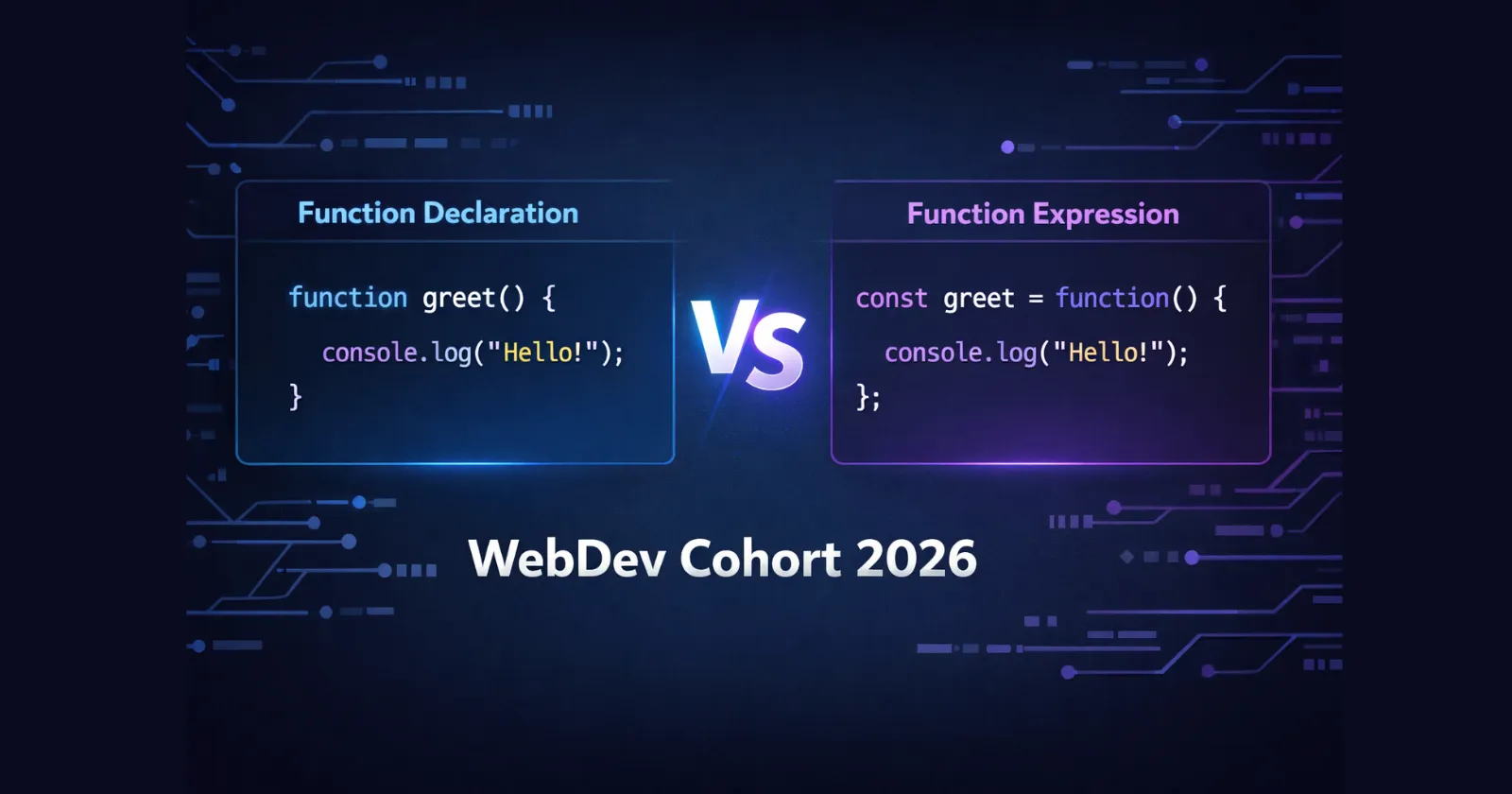
Function declarations vs function expressions in JavaScript: syntax, hoisting, when to use each, and a quick look at arrow functions.
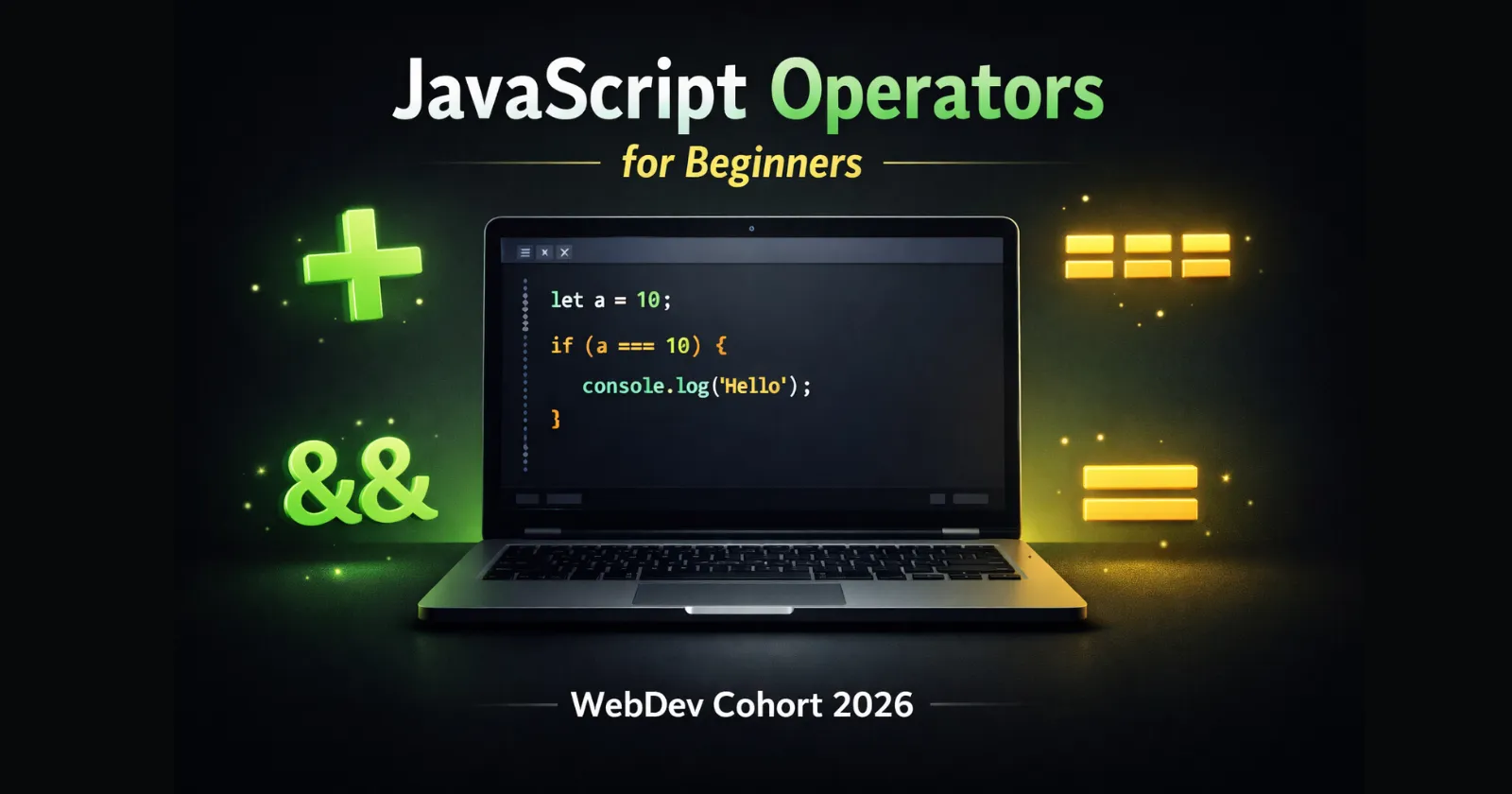
JavaScript operators explained: arithmetic, comparison, logical and assignment operators, with == vs === and a short practice exercise.
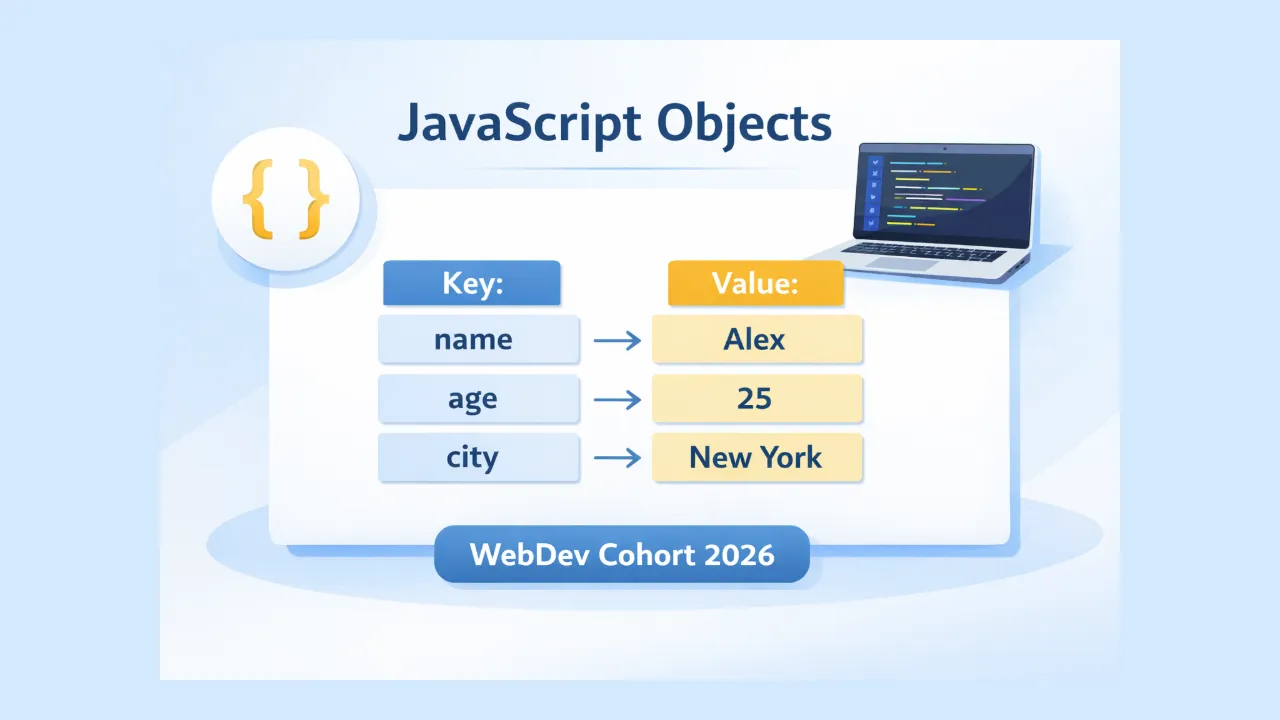
JavaScript objects from the ground up: key-value pairs, creating objects, reading, updating and deleting properties, and looping through keys.
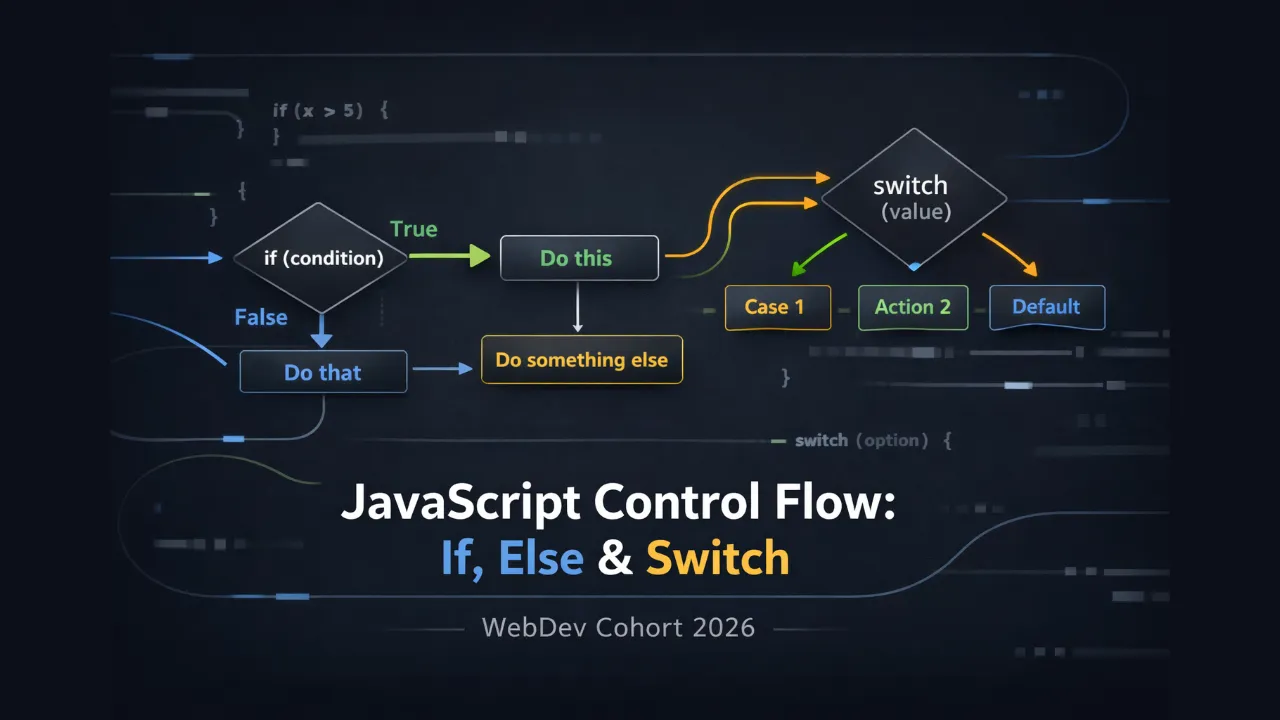
How JavaScript decides which code runs: if, else if, else and switch statements, with examples and when to use each.
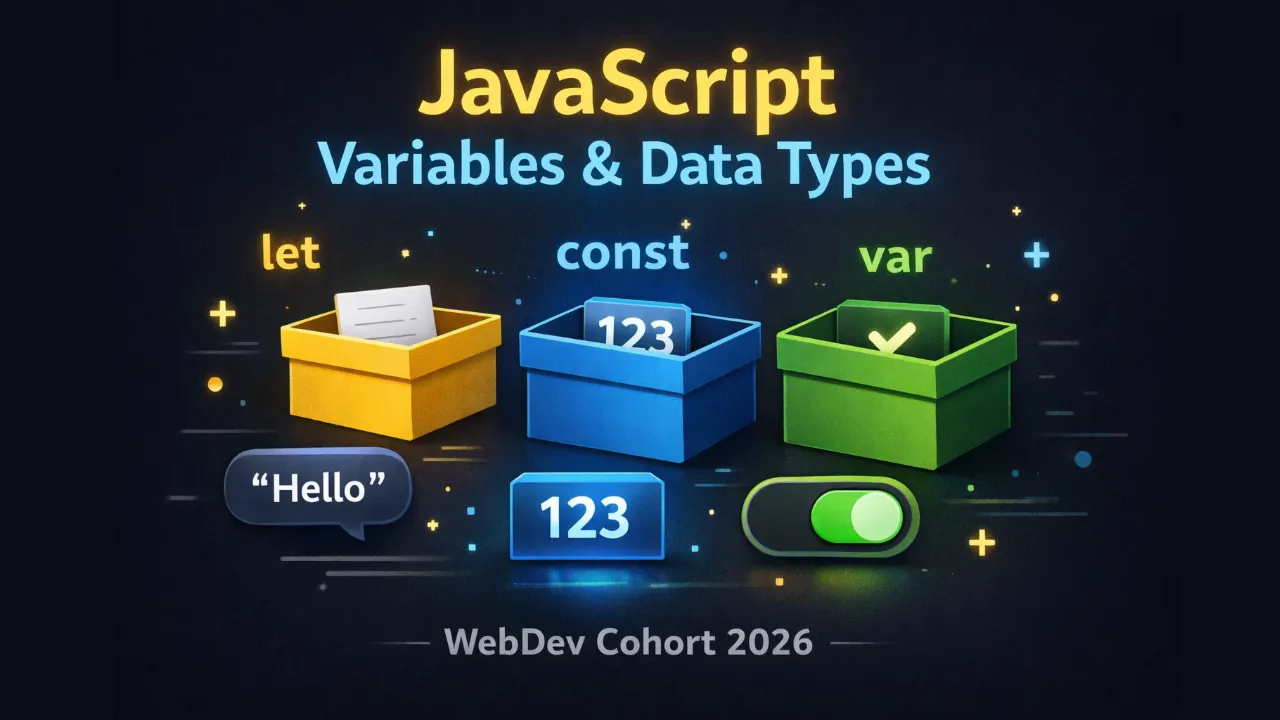
Real-life box analogy to introduce variables intuitively All 3 declaration types (var, let, const) with clear examples and when to use each Comparison
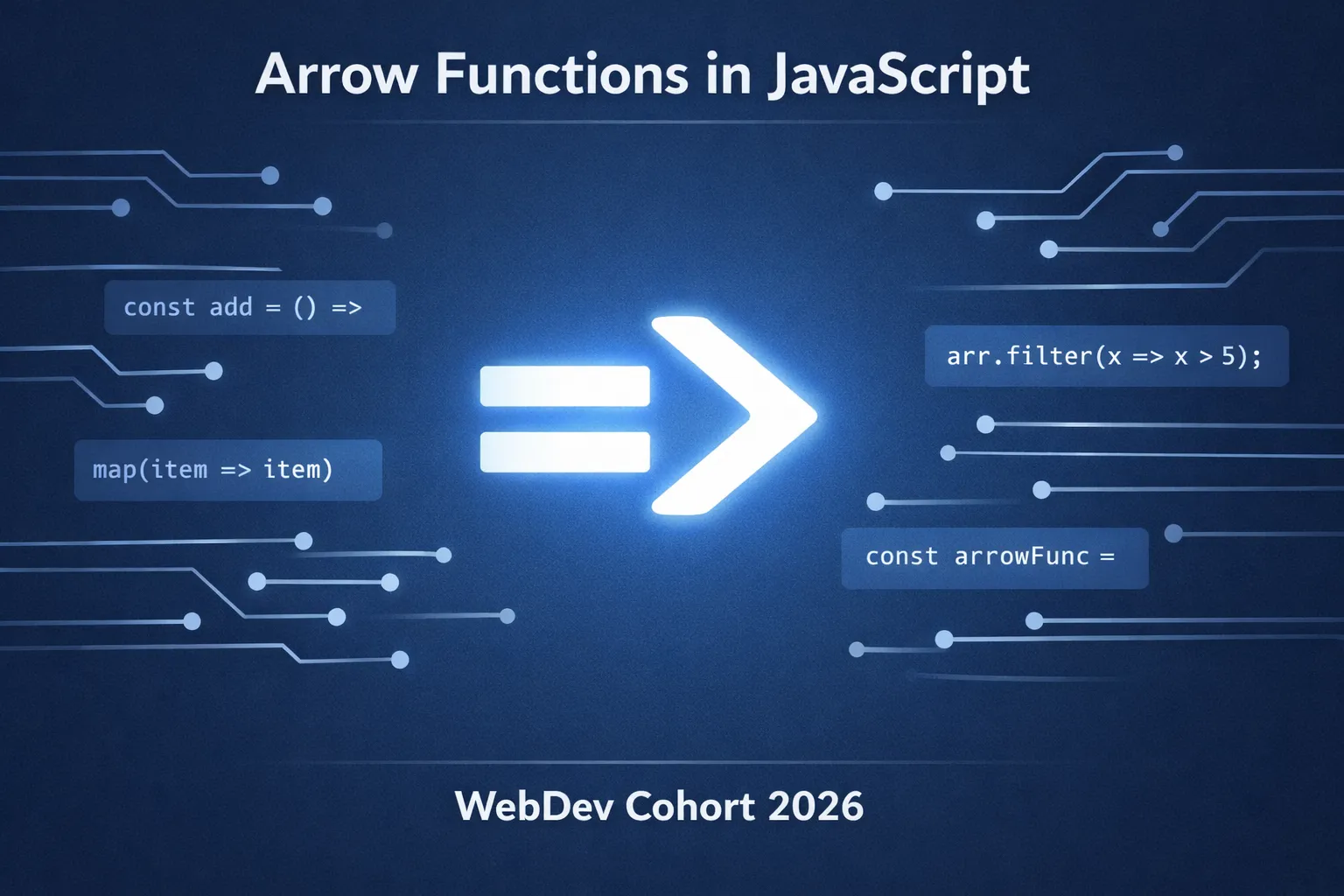
An arrow function is just a shorter, more modern way to write a function in JavaScript. That's honestly all it is. It was introduced in ES6 (2015) and
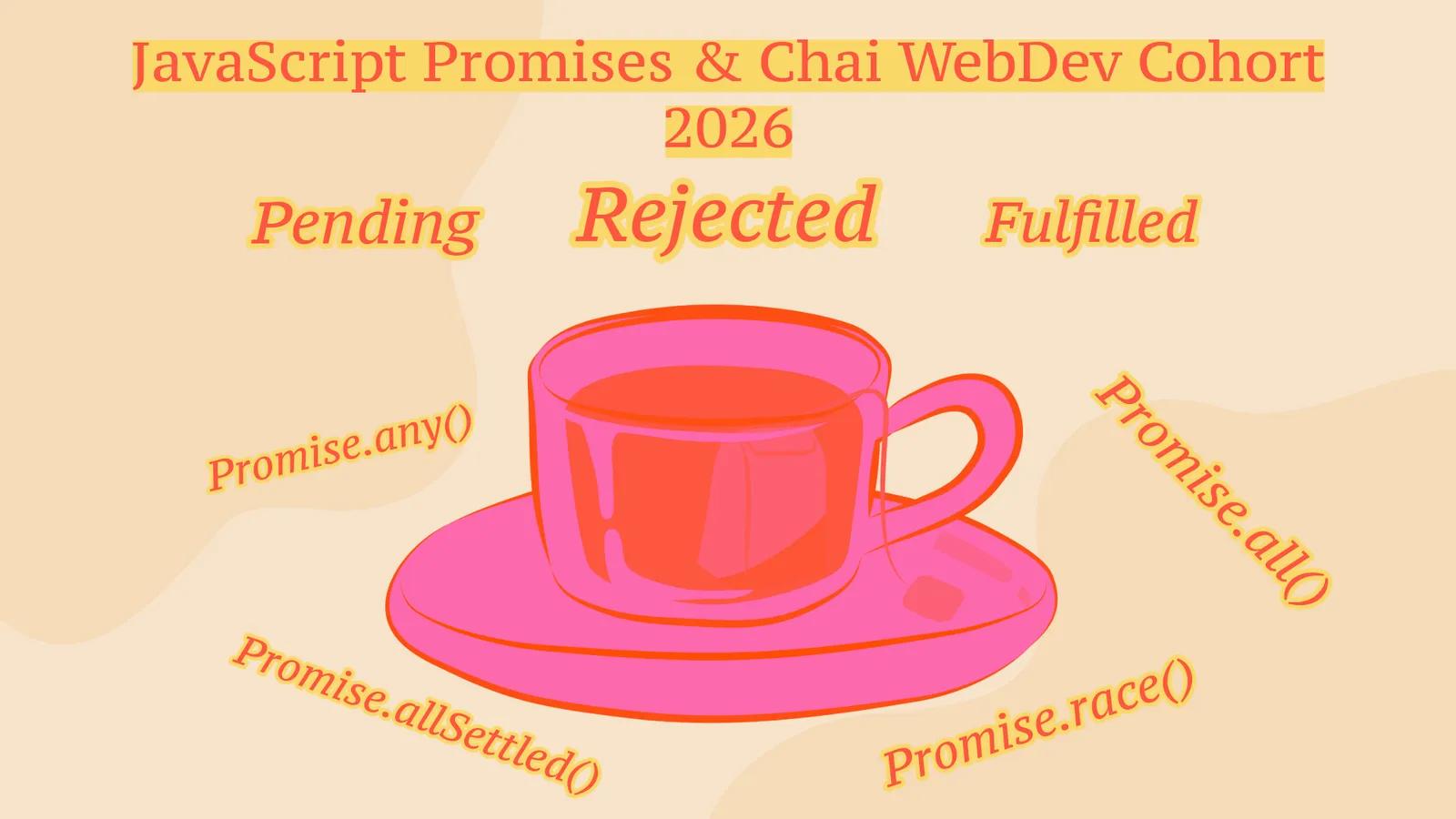
JavaScript Promises aren't complicated once you stop thinking of them abstractly.
Ten JavaScript array methods beyond the basics, including copyWithin, reduceRight, with and flatMap, plus a Shinchan-story warm-up on push, pop, slice, map and find.
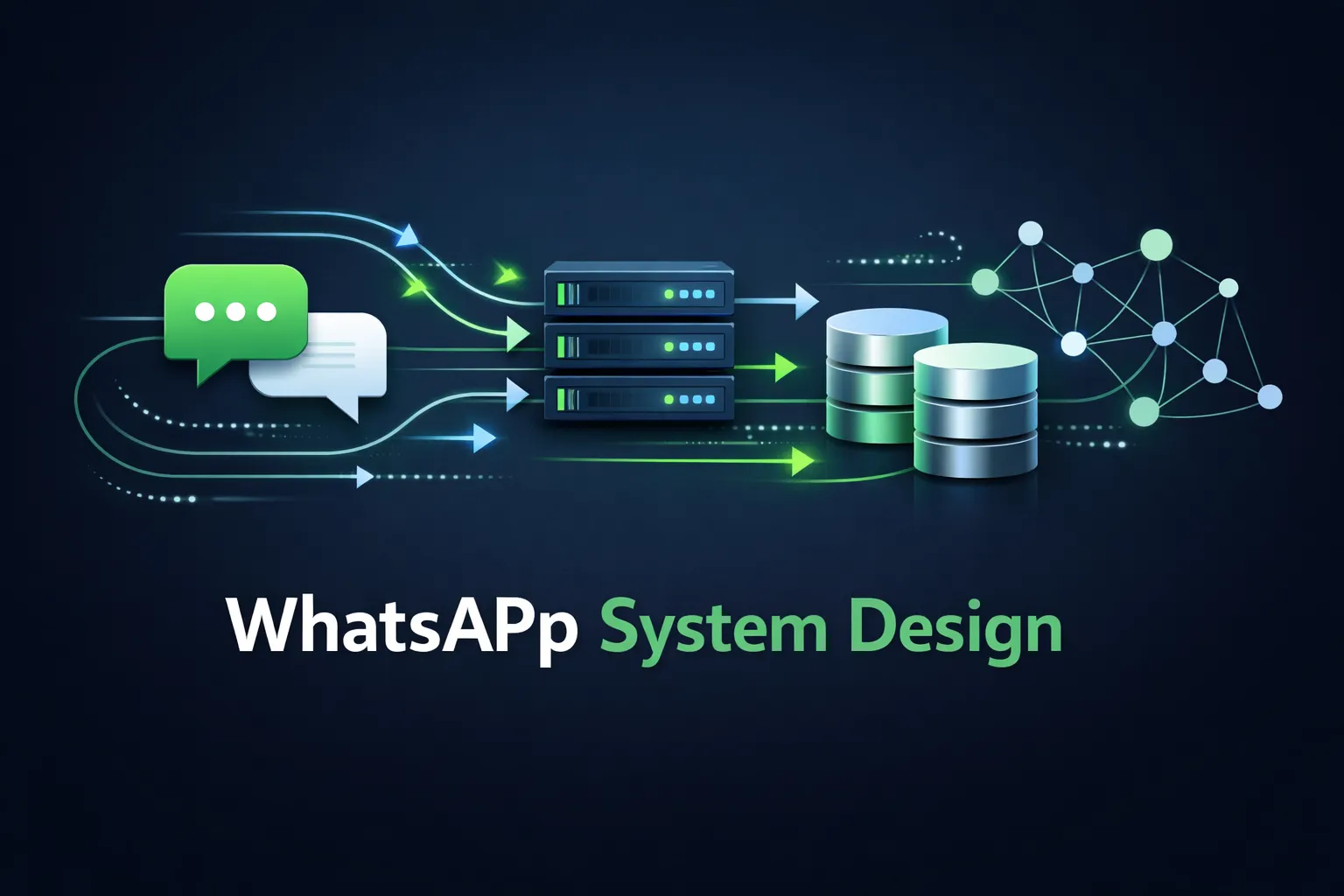
Understand WhatsApp system design: requirements, architecture, databases, scaling, encryption, protocols, and failure handling insights
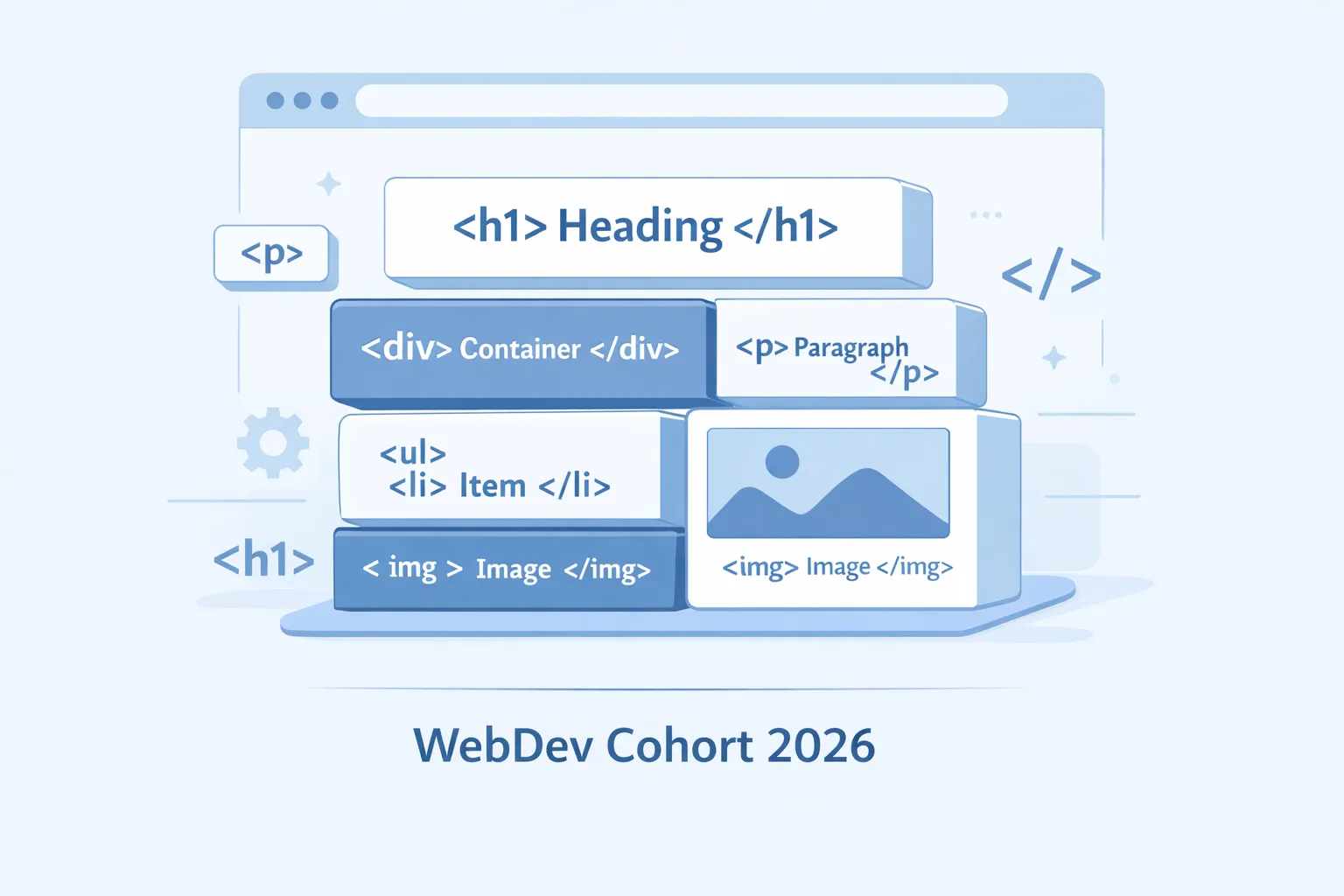
Learn the essentials of HTML tags and elements, their structure, and how to use them to create webpages. Perfect for beginners
Learn to write HTML faster and more efficiently with Emmet. Discover shortcuts, features, and tips for boosting your coding workflow
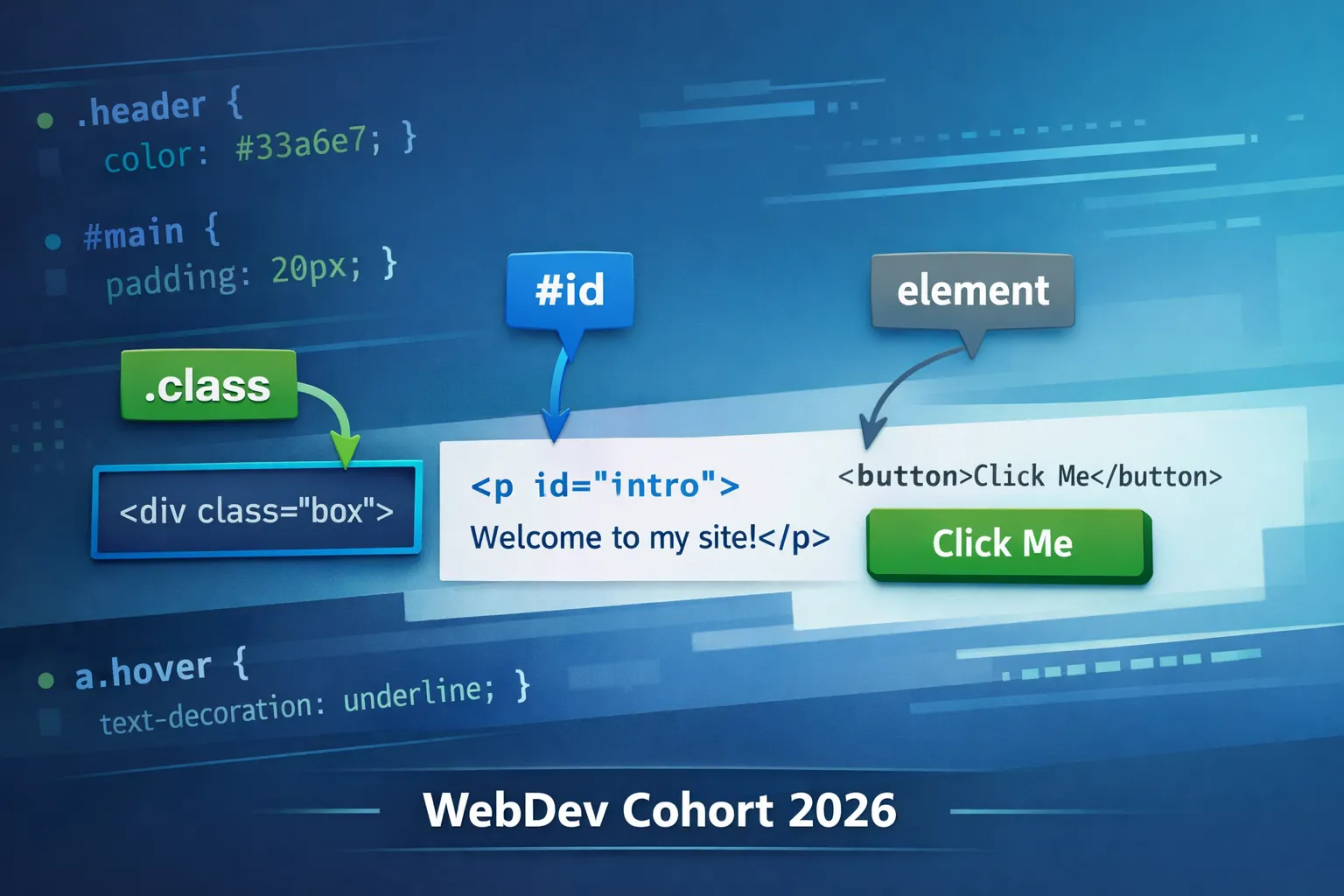
Learn the art of CSS selectors to precisely style your web elements, improve efficiency, and enhance your web development skills
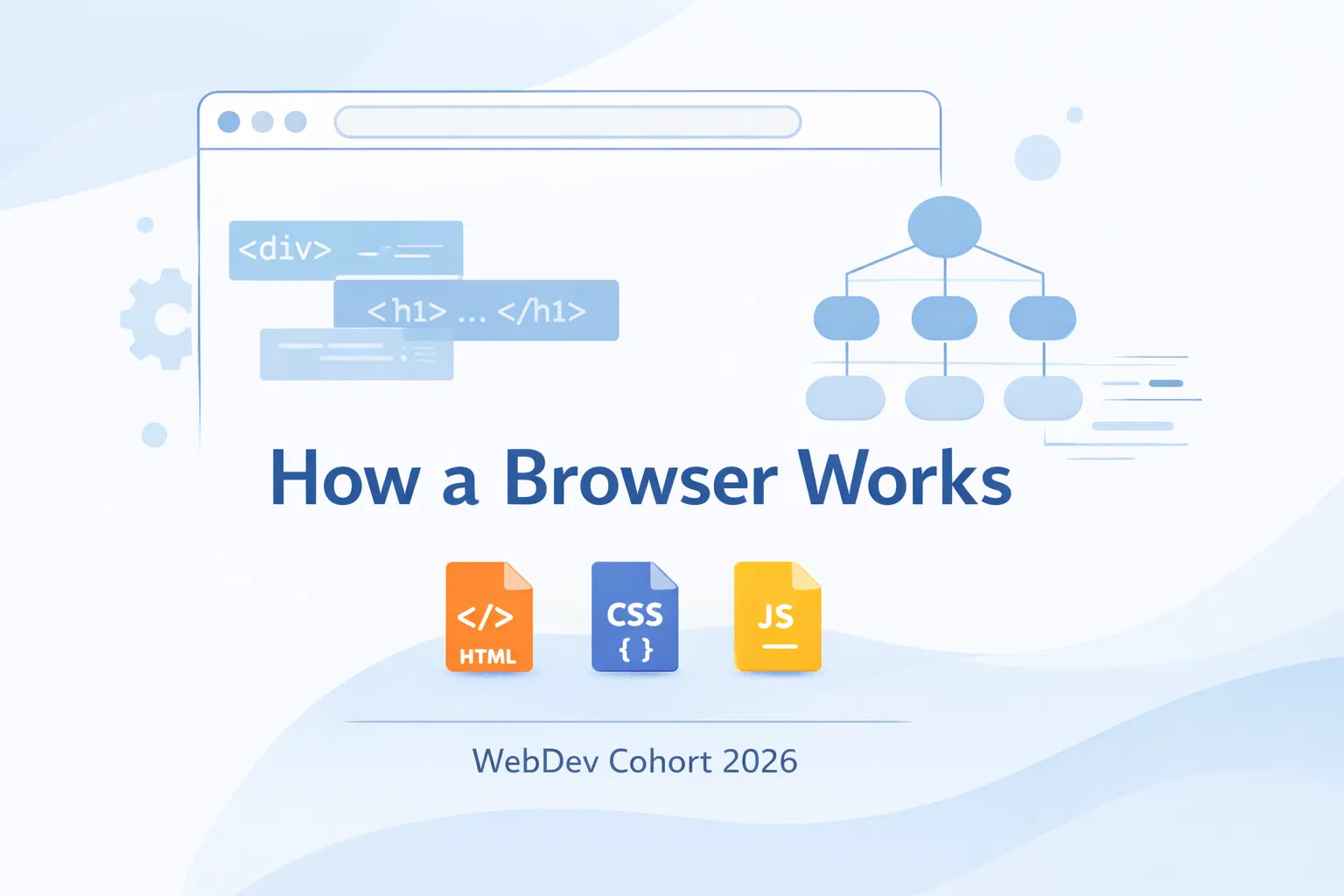
Discover what happens behind the scenes when you load a webpage, from typing a URL to rendering pixels on your screen
Discover the key differences between TCP and UDP and learn how they relate to HTTP in this informative guide
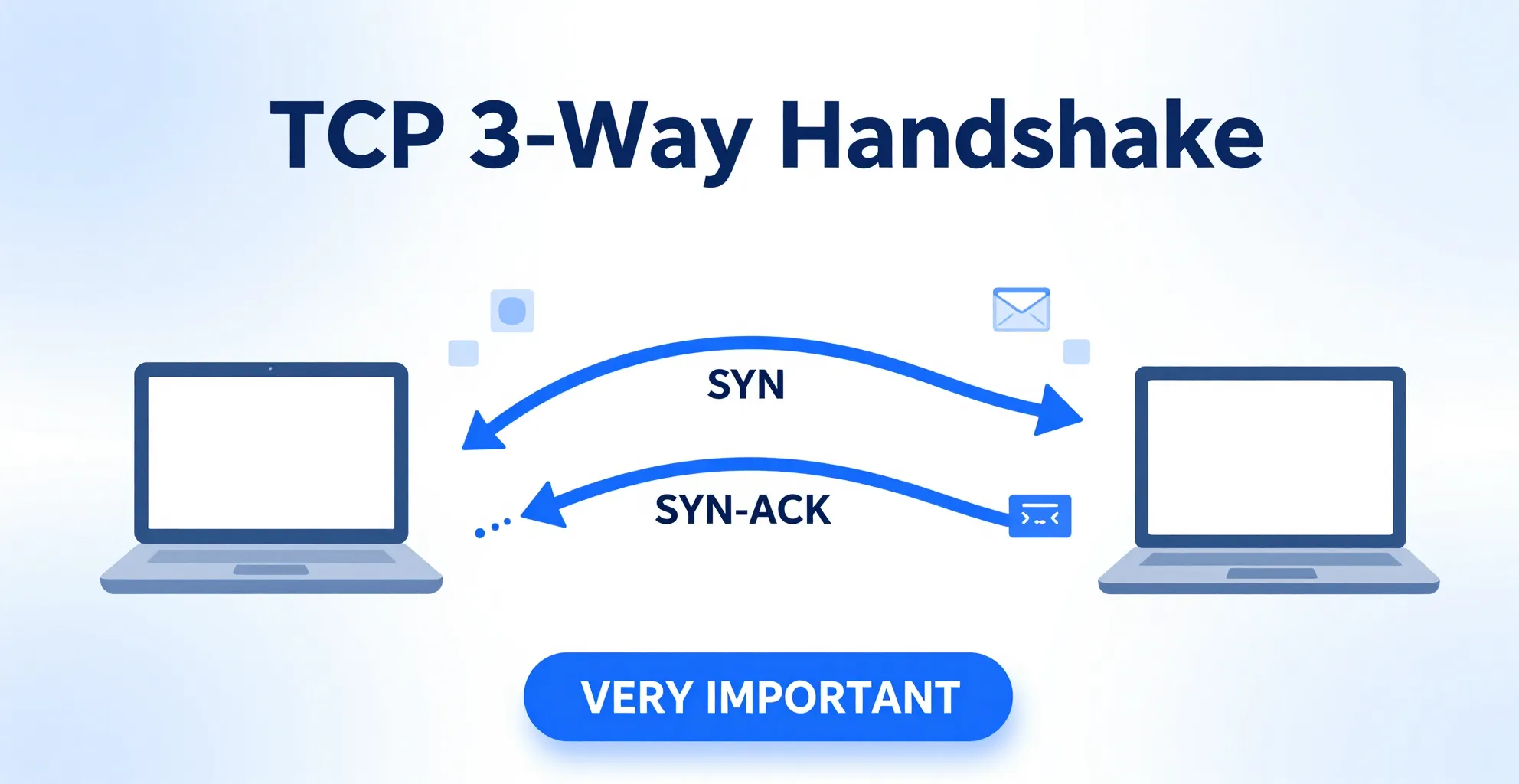
Discover how TCP ensures reliable internet communication with its 3-way handshake process and safeguards against data loss and corruption
Beginner's guide to cURL: Learn how to send server requests directly from your terminal without a browser. Perfect for API testing and automation!
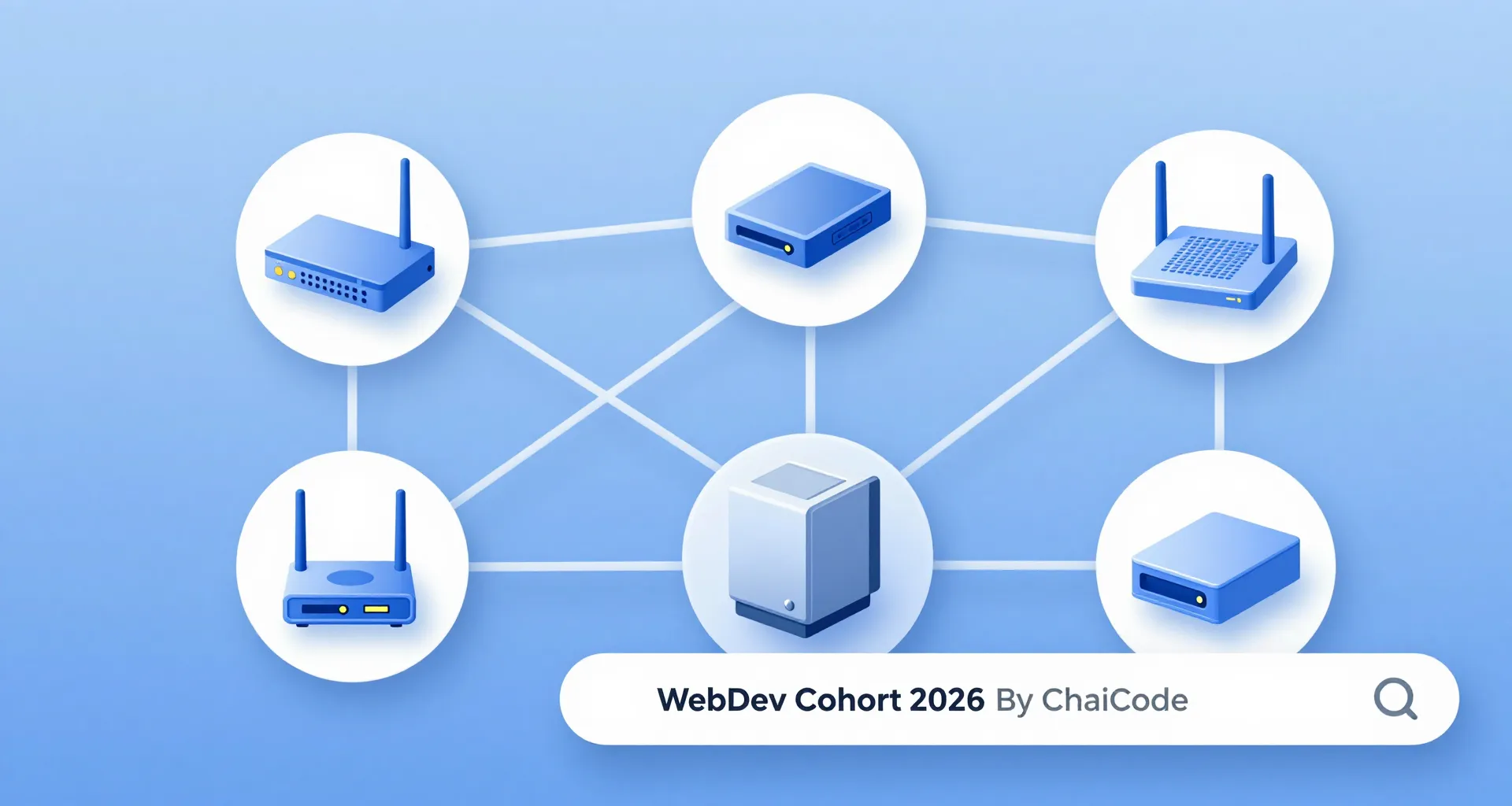
Beginner's guide to essential network devices supporting internet infrastructure; ideal for tech or web development newcomers
Journey from a tier-3 college to IBM: My story, struggles, rejections, and tips to breaking into tech giants
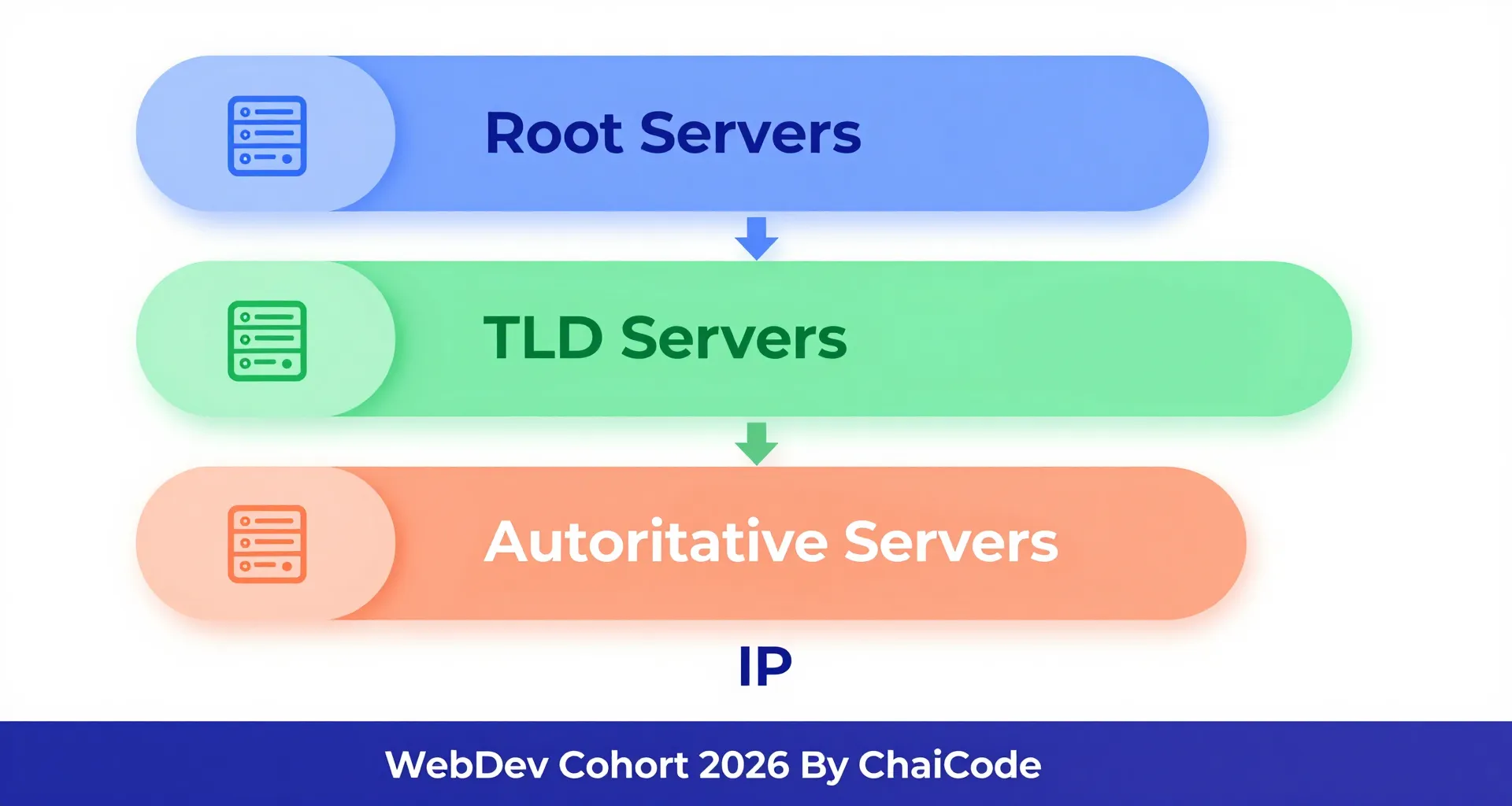
Learn how DNS resolution converts domain names to IP addresses, step by step, with explanations of root, TLD, and authoritative name servers
Learn about DNS record types and how they direct web traffic, emails, and domain control through simple examples and explanations
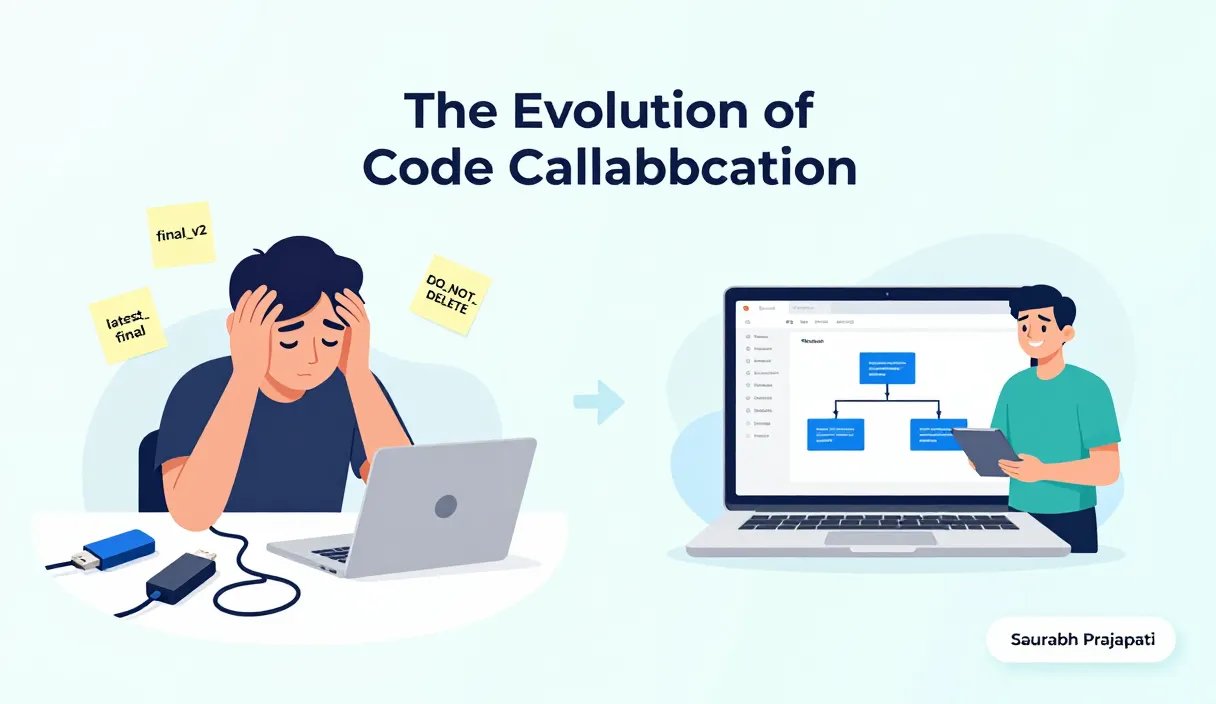
Discover the chaos of software development prior to version control systems and how they revolutionized teamwork and project management
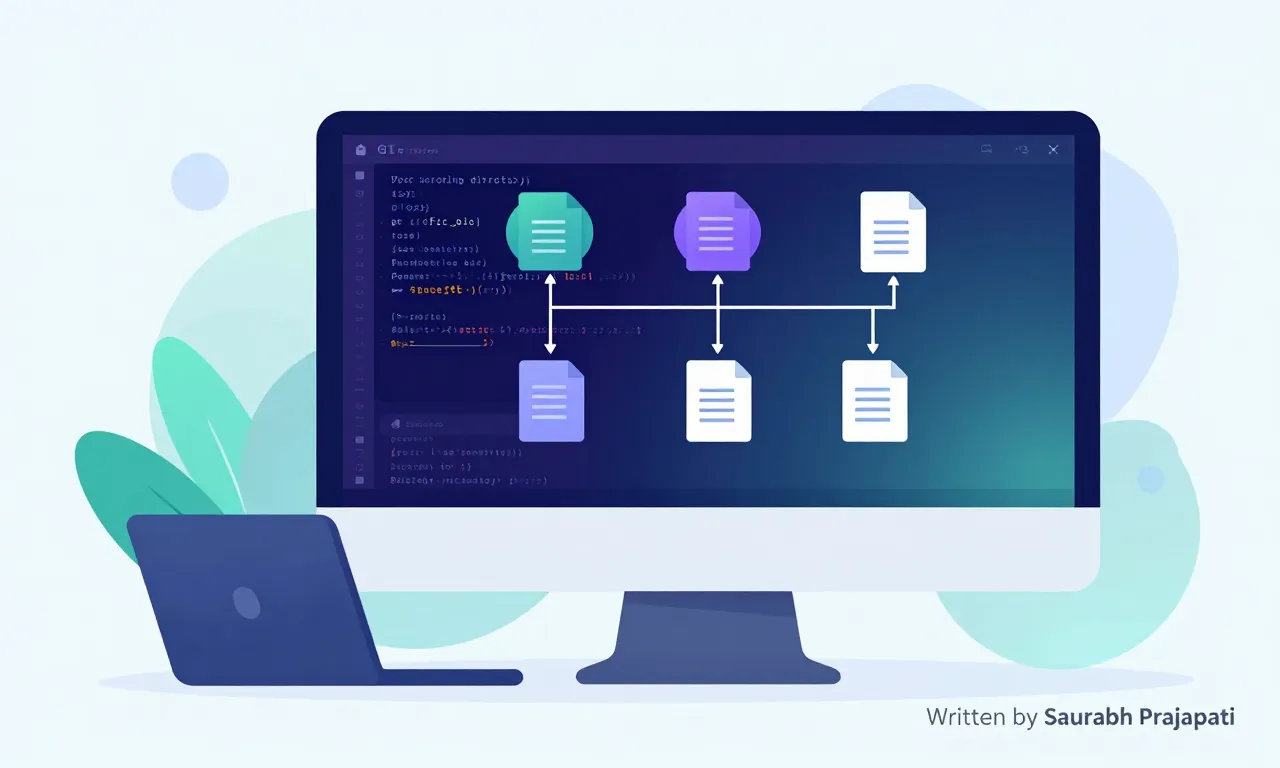
Learn Git basics and essential commands for tracking code changes, collaborating, and maintaining project history with this beginner-friendly guide
How Git stores blobs, trees and commits, and why that object model should shape your monorepo vs multi-repo decision.
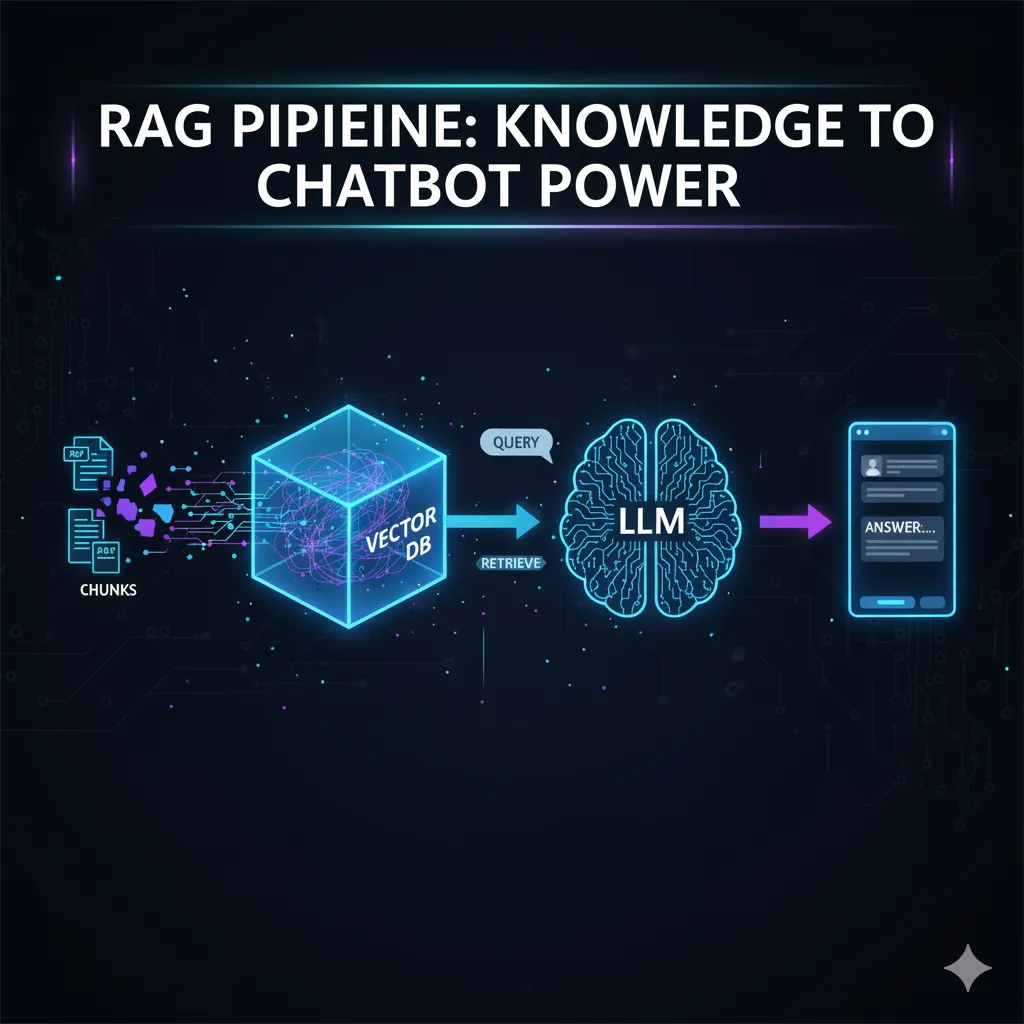
Learn RAG (Retrieval-Augmented Generation) step by step—chunking, embeddings, vector databases, query retrieval, and LLM integration.
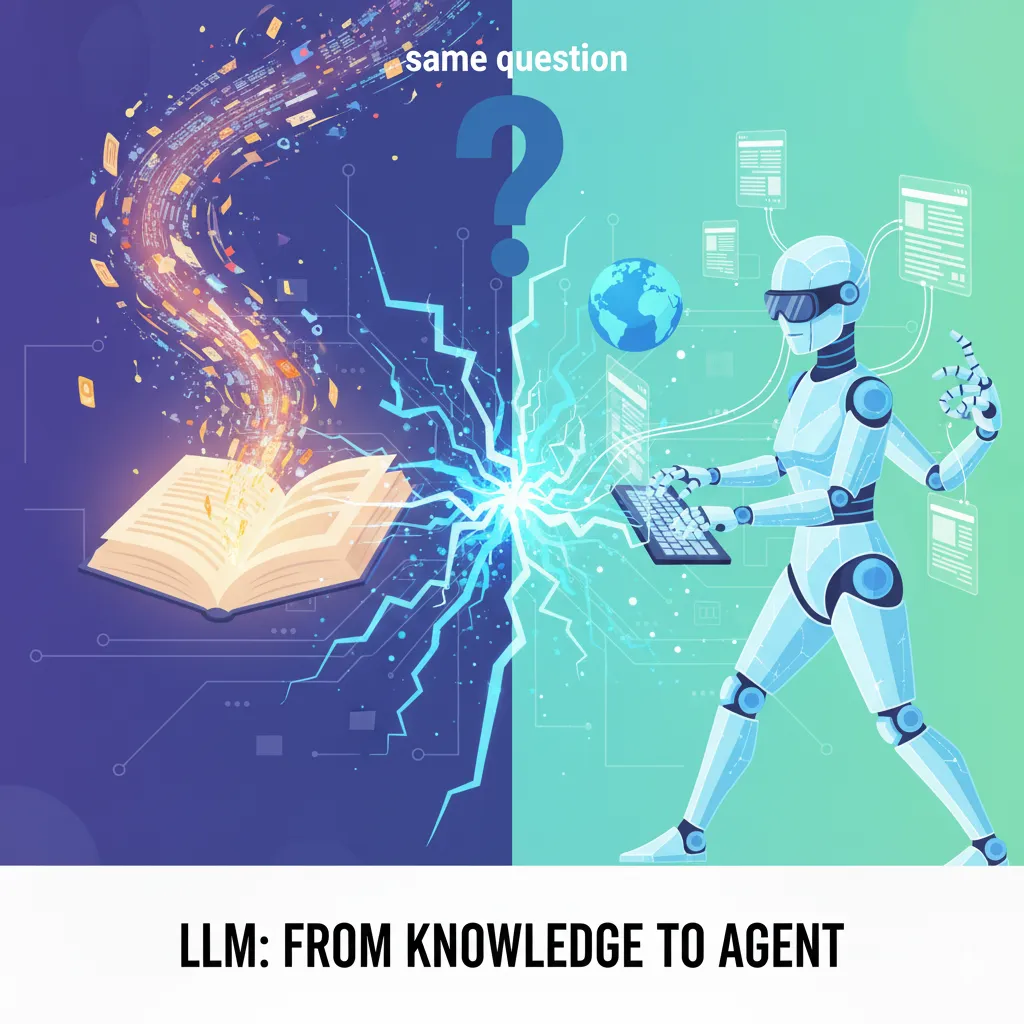
The difference between an LLM and an AI agent: how agents add tools, memory and actions to a language model, with a small agent that fetches news and movies.
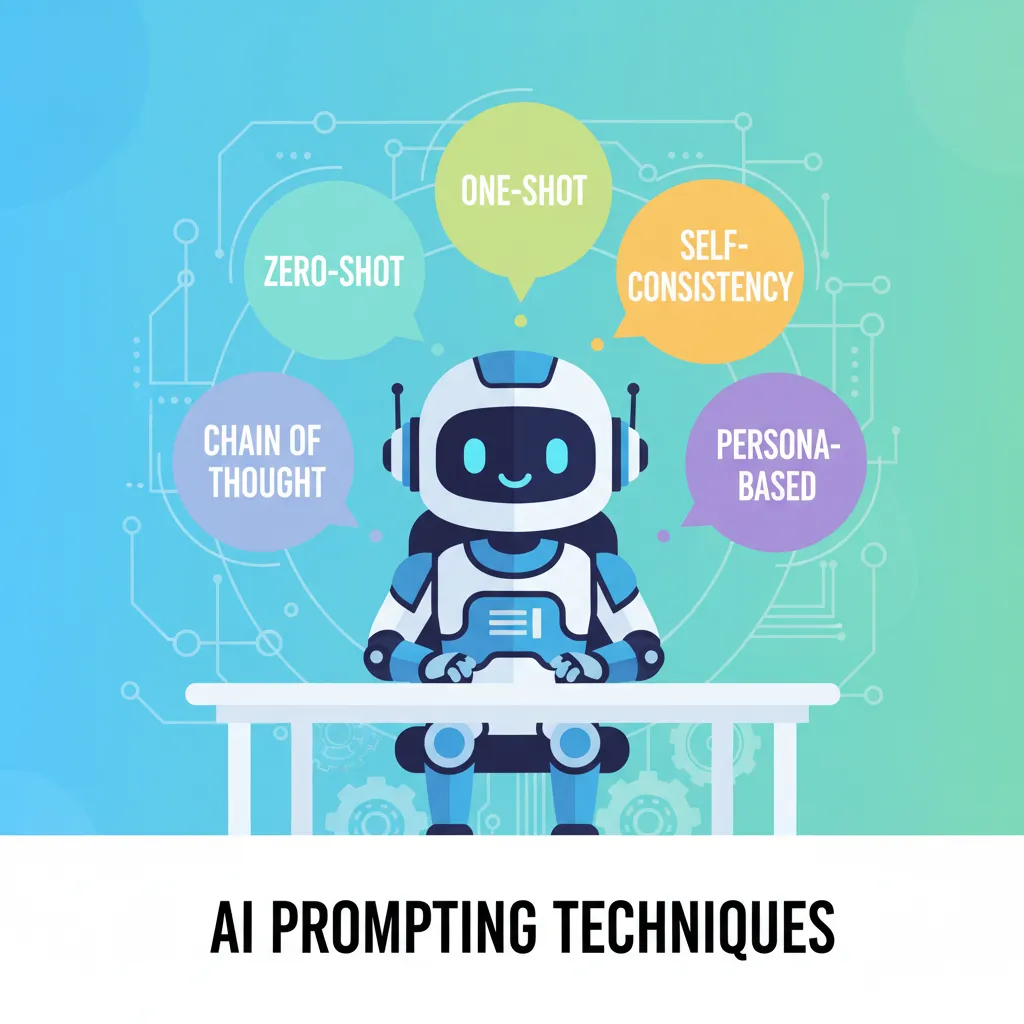
Learn prompting techniques like zero-shot, one-shot, chain of thought, self-consistency, and persona-based with easy examples.